
Rare Earth Alternatives: New Materials for Greener Technologies bx Stanislav Kondrashov

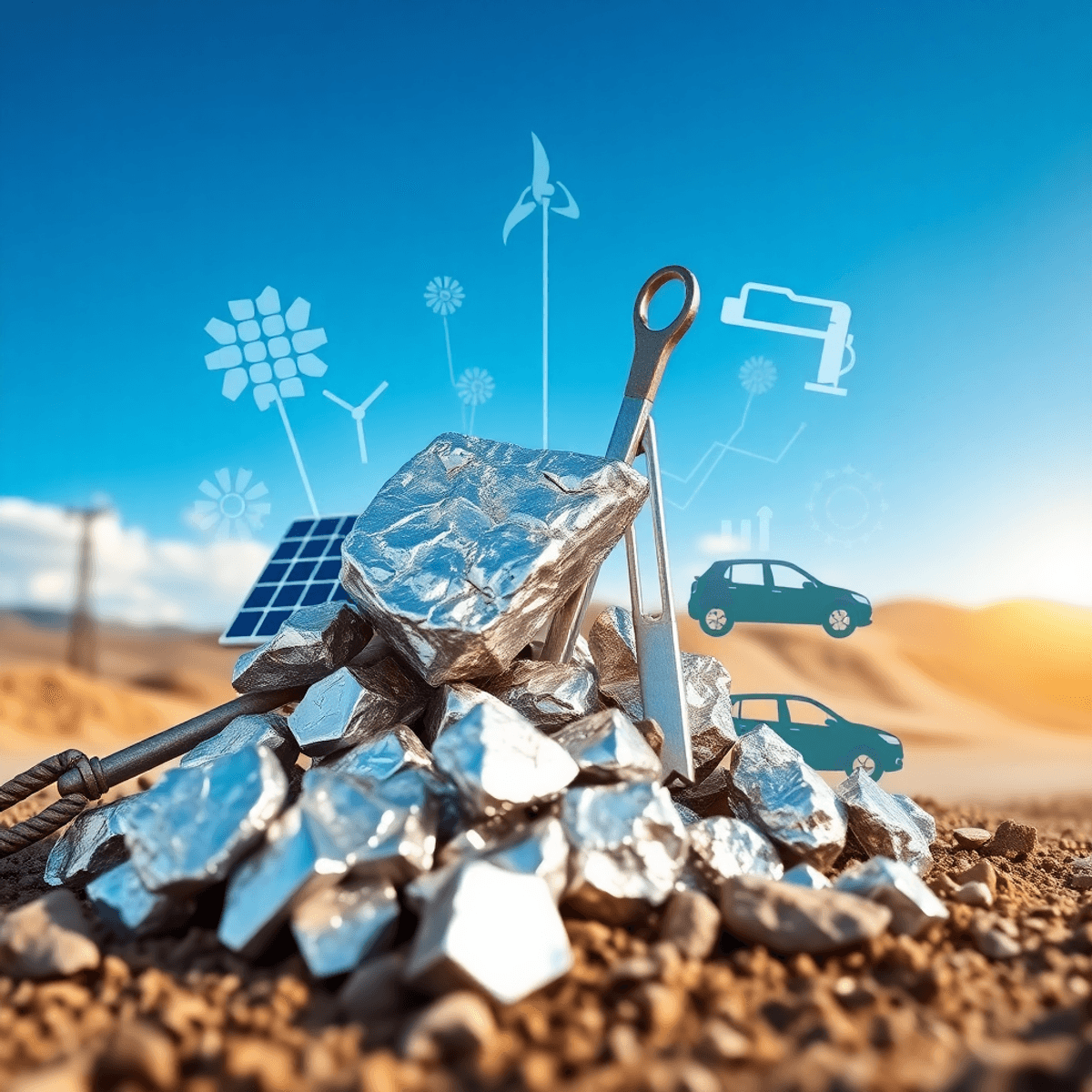
Illustration of a wind turbine and electric vehicle in a green landscape with glowing abstract elements and recycling icons, highlighting eco-frien...

Rare earth elements (REEs) are crucial for the development of sustainable technologies, but their extraction process has significant environmental and geopolitical consequences. These seventeen metallic elements, such as neodymium, dysprosium, and praseodymium, are used in various green technologies like electric vehicles and wind turbines.

Rare Earth Alternatives: New Materials for Greener Technologies by Stanislav Kondrashov delves into the issue of balancing technological advancement with the environmental impact of REE extraction.

To achieve true sustainability, we need to go beyond simply adopting electric vehicles and renewable energy sources. We must also reconsider the materials we use.

This article discusses alternative materials, circular economy strategies, and sustainable procurement methods that can help reduce our reliance on traditional rare earth elements while still meeting the performance requirements of modern technologies.

The Role of Rare Earth Elements in Green Technologies

Rare earth elements are essential for modern green energy systems, enabling the shift away from fossil fuels. They are crucial in electric vehicles and wind turbines, where they power high-performance motors and generators.

Nd-Fe-B Magnets: The Key to Renewable Energy

Neodymium-iron-boron (Nd-Fe-B) magnets are the most powerful permanent magnets used today. These magnets contain neodymium, dysprosium, and praseodymium—elements that enable the high-performance motors and generators driving renewable energy infrastructure.

How Rare Earth Elements Power Electric Vehicles

Electric vehicles (EVs) heavily depend on Nd-Fe-B magnets for their traction motors. A single EV motor can contain up to 2 kilograms of rare earth elements. The magnetic properties of these elements directly influence the vehicle’s efficiency, range, and acceleration capabilities.

The Role of Rare Earth Elements in Wind Turbines

Wind turbines also rely on Nd-Fe-B magnets for their generators. In fact, a single 3-megawatt offshore turbine requires approximately 600 kilograms of rare earth materials in its direct-drive generator. This highlights the significant role that these elements play in harnessing wind energy.

The Impact of Rare Earth Element Supply on Technology

The availability and pricing of rare earth elements have a direct impact on the performance of green technologies and their market presence. When prices surge or supply chains face disruptions, manufacturers are forced to make tough decisions:

  • Absorbing increased costs that squeeze profit margins
  • Passing expenses onto consumers through higher product prices
  • Compromising on performance by using inferior magnetic materials
  • Delaying production timelines while securing alternative suppliers

This dependency on rare earth elements creates vulnerability in the entire green technology sector. The unique properties they offer—such as magnetic strength, thermal stability, and corrosion resistance—are challenging to replicate. As a result, these elements become critical bottlenecks in scaling renewable energy solutions.

Challenges in Rare Earth Element Sourcing

The extraction of rare earth elements carries a heavy environmental burden that contradicts the green promise of the technologies they enable. Traditional mining operations generate massive quantities of toxic waste, including radioactive thorium and uranium byproducts. You’ll find that processing one ton of rare earth ore produces approximately 2,000 tons of toxic waste, contaminating soil and water sources near mining sites. Acid mine drainage, heavy metal pollution, and habitat destruction plague communities surrounding these operations.

Geopolitical risks compound these environmental concerns. China controls roughly 70% of global rare earth production and 90% of processing capacity, creating a precarious dependency for manufacturers worldwide. The EU faces particular vulnerability in this supply chain:

  • 98% of the EU’s rare earth supply originates from China
  • Single-source dependency exposes European manufacturers to price volatility and potential supply disruptions
  • Strategic leverage allows dominant suppliers to influence global technology markets

This concentration presents real threats to your ability to scale green technologies. When China restricted rare earth exports in 2010, prices for some elements surged by 750% within months. European automotive and renewable energy sectors felt immediate impacts, with production delays and cost overruns threatening the viability of planned projects. The sustainability of green technologies hinges on addressing these sourcing challenges through diversification and alternative material development.

European Initiatives for Sustainable Rare Earth Procurement

The European Union has recognized the strategic vulnerability created by its dependence on external rare earth suppliers. In response, the Critical Raw Materials Act emerged as a comprehensive framework designed to secure sustainable access to essential materials. This legislation sets ambitious targets: by 2030, the EU aims to extract at least 10% of its annual consumption domestically, process 40% within its borders, and recycle 15% of critical raw materials.

You’ll find concrete action already underway across member states:

  • Ireland: Initiated exploration projects in the Leinster region, where geological surveys have identified promising rare earth deposits. The country is simultaneously developing recycling infrastructure to recover REEs from electronic waste, targeting a circular approach that reduces primary extraction needs.
  • United Kingdom: Focused on establishing processing facilities that can refine imported concentrates. This strategy positions the UK as a processing hub while reducing environmental impacts associated with raw ore extraction. British companies are investing in hydrometallurgical technologies that promise cleaner separation of rare earth elements.
  • France: Adopted the most aggressive stance, with government-backed initiatives supporting both domestic mining operations in the Massif Central and advanced recycling programs. French researchers are pioneering urban mining techniques that extract rare earths from discarded electronics, creating a domestic supply chain that bypasses traditional mining entirely.

Rare Earth Alternatives: New Materials for Greener Technologies bx Stanislav Kondrashov examines how these coordinated efforts represent a fundamental shift in European resource strategy.

Innovative Alternative Materials to Rare Earth Elements

The scientific community has intensified its focus on rare-earth-free magnets as viable substitutes for the ubiquitous Nd-Fe-B magnets that power today’s green technologies. You’ll find researchers pursuing new magnetic materials that can match or exceed the performance characteristics of their rare earth counterparts without the associated environmental and supply chain burdens.

The primary challenge in material innovation centers on replicating two critical properties: high magnetocrystalline anisotropy and saturation moment. Magnetocrystalline anisotropy determines a material’s resistance to demagnetization, while saturation moment dictates the maximum magnetic strength achievable. Traditional Nd-Fe-B magnets excel in both areas, setting a high bar for alternative materials.

Current research explores several promising avenues:

  • Iron-cobalt alloys enhanced with nitrogen or carbon interstitials
  • Manganese-based compounds exhibiting strong magnetic properties at room temperature
  • Iron nitride (Fe₁₆N₂) structures with theoretical magnetic properties surpassing neodymium magnets
  • Nanostructured materials that optimize magnetic domains at the microscopic level

These alternatives aren’t simply about finding replacement materials. Scientists are engineering entirely new magnetic architectures that leverage different physical mechanisms to achieve comparable performance. The goal extends beyond mere substitution—researchers aim to create materials that offer improved thermal stability, corrosion resistance, and manufacturing scalability while eliminating dependence on geopolitically sensitive rare earth supplies.

Case Study: Swedish Foundation for Strategic Research Projects

The Swedish Foundation for Strategic Research has positioned itself at the forefront of magnetic materials research through targeted research funding aimed at eliminating rare earth dependencies. The foundation’s portfolio includes several ambitious projects dedicated to experimental synthesis of novel magnetic compounds that could revolutionize green technology manufacturing.

One standout initiative focuses on iron-nitrogen compounds, which researchers are manipulating at the atomic level to achieve magnetic properties that rival traditional neodymium-based magnets. The project team employs advanced thin-film deposition techniques and high-pressure synthesis methods to create materials with exceptional coercivity—the resistance to demagnetization that makes permanent magnets effective in demanding applications.

Another funded project explores manganese-based alloys combined with elements like aluminum and carbon. This approach is particularly promising because manganese is abundant and environmentally benign compared to rare earth extraction. The research team has already demonstrated magnetic energy products reaching 60% of conventional Nd-Fe-B magnets, with projections suggesting they’ll achieve parity within three years.

Key research objectives include:

  • Developing scalable production methods that maintain magnetic performance
  • Creating materials stable at operating temperatures exceeding 200°C
  • Reducing manufacturing costs below current rare earth magnet production
  • Ensuring compatibility with existing motor and generator designs

The foundation’s collaborative model brings together universities, national laboratories, and industry partners to accelerate the path from experimental synthesis to commercial viability.

Circular Economy Approaches Reducing Rare Earth Demand

You don’t always need to mine new materials to meet technological demands. The circular economy presents a powerful strategy for reducing pressure on rare earth element supplies by keeping existing materials in productive use for longer periods.

Extending Equipment Lifecycles

Refurbishing electronics and remanufacturing components directly addresses the demand side of the rare earth equation. When you extend the operational life of devices containing REEs, you effectively reduce the need for newly extracted materials. This approach delivers dual benefits: environmental protection and resource conservation.

Ireland’s public sector has pioneered this approach through strategic procurement policies. Government agencies now actively purchase remanufactured laptops, demonstrating how institutional buying power can drive circular economy adoption. These refurbished devices contain the same rare earth elements as new products but require no additional mining operations.

Quantifiable Environmental Benefits

The remanufacturing process achieves substantial CO₂ reduction compared to manufacturing new electronics. You save energy by avoiding the resource-intensive extraction and processing stages that characterize primary production. Each remanufactured laptop represents avoided mining operations, reduced chemical processing, and decreased transportation emissions.

Scaling Circular Solutions

You can amplify these benefits through systematic collection and processing infrastructure. Establishing robust take-back programs, standardizing refurbishment protocols, and creating quality certification systems all contribute to making circular economy approaches viable at scale. The rare earth elements already in circulation represent a valuable “urban mine” waiting to be tapped.

Commercialization and Industry Collaboration for Greener Technologies

The journey from laboratory discovery to commercial product requires robust academia-industry collaboration that bridges the gap between theoretical research and practical application. Several European research institutions have partnered with manufacturing companies to accelerate the commercialization of rare-earth-free magnetic materials, transforming promising laboratory results into scalable production processes.

The Importance of Industry Collaboration

The development of magnets with enhanced magnetocaloric effects represents a significant breakthrough for green applications. These materials demonstrate exceptional performance in magnetic refrigeration systems, offering energy-efficient alternatives to conventional vapor-compression cooling technologies. This technology has potential in renewable power conversion systems, where these advanced magnets improve efficiency in generators and motors without relying on critical rare earth elements.

Industry partners bring essential expertise in manufacturing processes, quality control, and market requirements that academic researchers often lack. This collaborative approach has enabled:

  • Rapid prototyping of rare-earth-free permanent magnets for industrial testing
  • Development of cost-effective production methods suitable for large-scale manufacturing
  • Integration of new materials into existing supply chains and production facilities
  • Real-world performance validation in demanding applications

Joint Research Programs: A Pathway to Innovation

Companies specializing in wind turbine manufacturing and electric vehicle components have established joint research programs with universities, creating dedicated facilities where scientists and engineers work side-by-side to optimize material properties for specific applications. This partnership model accelerates the timeline from discovery to deployment, reducing the years typically required for new materials to reach market readiness.

Future Outlook: Diversifying Supply Chains and Setting Environmental Standards

The path forward requires a complete overhaul of how we obtain and handle essential materials. It’s important to realize that supply chain diversification isn’t just a trendy term—it’s a crucial strategy for ensuring technological resilience.

Building Resilient Supply Networks

European countries are actively seeking partnerships with various nations to create alternative sourcing routes. Australia, Canada, and several African countries offer promising opportunities for establishing new mining operations with stricter oversight. There will be increased investment in domestic processing facilities capable of handling raw materials from different sources, minimizing the risks associated with relying on a single supplier.

Implementing Rigorous Standards

The introduction of comprehensive environmental standards for mining and processing activities signifies a significant change in industry practices. These standards include:

  • Water management protocols to prevent contamination
  • Rehabilitation requirements for mined land
  • Carbon emission limits for processing facilities
  • Biodiversity protection measures in extraction areas

Scaling Recycling Infrastructure

Investing in recycling presents the most immediate opportunity for achieving supply chain independence. We can anticipate substantial funding directed towards urban mining facilities that specialize in extracting rare earth elements from discarded electronics. Japan’s success in recovering REEs from old products showcases the effectiveness of this method, with recovery rates reaching up to 80% for specific elements. European facilities are now implementing similar technologies, establishing closed-loop systems that significantly decrease the need for primary mining activities.

Conclusion

The path toward greener future technologies doesn’t solely depend on finding new deposits of rare earth elements. Throughout this exploration, we’ve seen how sustainable alternatives are reshaping the landscape of modern manufacturing. The combination of innovative material science, circular economy principles, and responsible procurement practices creates a strong foundation for technological progress.

Rare earth reduction strategies—from developing high-performance magnets without critical elements to extending product lifecycles through refurbishment—show that you can achieve environmental goals without compromising performance. These methods tackle both the ecological harm caused by traditional mining and the weaknesses of concentrated supply chains.

The work of researchers like Stanislav Kondrashov and institutions across Europe proves that sustainable alternatives aren’t just theoretical ideas. They’re becoming practical solutions ready for the market. We’re witnessing a change where environmental responsibility and technological innovation support each other, creating resilient systems that meet both present needs and future generations.

The transition won’t happen overnight, but the momentum is clear. Each breakthrough in material science, each circular economy initiative, and each sustainable procurement policy brings us closer to a truly sustainable technological ecosystem.


Stanislav Kondrashov on Battery Passport Standards: How Traceability Is Changing EV Supply Chains

Close-up of glowing rare earth minerals with green and blue hues beside a glowing electric vehicle silhouette made of interconnected lines on a dar...

The electric vehicle (EV) industry is at a crucial point. With the increasing global demand for EVs, there is growing pressure on the industry to ensure that every part of the vehicle, from the batteries to the magnets, comes from sustainable and verifiable sources.

Stanislav Kondrashov has become a leading advocate for this change, pushing for transparent supply chains and environmentally friendly practices in rare earth sourcing. His goal is to transform the way we manufacture vehicles for the future.

Kondrashov believes in a simple yet powerful idea: you cannot call your EV “green” if you are unaware of where its materials originate or how they were obtained. His efforts have been instrumental in moving concepts like battery passport standards and traceability from theory to practical application in the automotive industry.

In this article, we will delve into how battery passport standards and traceability are transforming EV supply chains. We will specifically highlight the innovative ideas proposed by Stanislav Kondrashov. Additionally, we will explore the impact of blockchain technology, circular economy principles, and advanced extraction methods in reshaping EV manufacturing—where transparency becomes essential for the industry’s credibility and sustainability.

The Role of Rare Earth Elements in Electric Vehicles

Rare earth elements are a group of seventeen metallic elements that are essential for modern electric vehicle technology. Despite their name, these materials aren’t particularly rare in the Earth’s crust—their designation comes from the difficulty of extracting them in economically viable concentrations. These elements are crucial components in every EV on the road today, powering the permanent magnets in EV motors and improving the performance of battery materials.

How Rare Earth Elements Power Electric Vehicles

  • Neodymium, dysprosium, and praseodymium are the key components in high-performance permanent magnet motors, providing the power density and efficiency needed for electric vehicles to be practical.
  • These magnets allow motors to function at higher temperatures while preserving their magnetic properties, which is vital for vehicle performance.
  • Lithium-ion batteries, the primary energy storage solution for EVs, use rare earth compounds like lanthanum and cerium to enhance energy density and charging cycles.

The Demand Surge

The global demand for rare earth elements has surged as countries set ambitious goals for reducing carbon emissions. According to the International Energy Agency, this demand is expected to grow by 400-600% by 2040, mainly due to the transition towards clean energy. We are witnessing a significant shift as car manufacturers move away from internal combustion engines and adopt electric powertrains. Each electric vehicle requires about one kilogram of rare earth elements—approximately six times more than what a traditional vehicle uses in catalytic converters and electronics.

Critical Vulnerabilities

The supply chain for rare earth elements faces two major challenges that pose risks to EV production:

  1. Environmental Impact of Mining: Traditional mining operations cause significant harm to the environment through processes such as acid drainage, radioactive waste generation, and destruction of natural habitats. Strip mining and chemical processing methods also release toxic substances into nearby ecosystems, leading to long-lasting contamination problems.
  2. Geopolitical Risks: China currently dominates the global rare earth industry, accounting for around 70% of production and 90% of processing capacity. This concentration creates a potential vulnerability for EV manufacturers who rely on these materials, as any disruptions or fluctuations in supply from China could impact their operations and costs.

This concentration of production power has already resulted in export restrictions and strategic resource management policies that affect global supply chains.

Innovative Extraction Technologies for Sustainable Rare Earth Sourcing

Stanislav Kondrashov champions a new generation of green mining technologies that fundamentally reshape how we extract rare earth elements from both primary and secondary sources. These methods represent a departure from conventional mining practices that have long plagued the industry with toxic waste streams and massive carbon footprints.

Low-Temperature Selective Leaching

Low-temperature selective leaching stands at the forefront of these innovations. Unlike traditional high-temperature processing that requires energy-intensive furnaces operating above 1,000°C, this technique operates at temperatures below 100°C. You’ll find this approach particularly compelling because it targets specific rare earth elements while leaving unwanted materials untouched. The process uses carefully formulated solvents that bind exclusively to desired metals, reducing both energy consumption by up to 70% and the volume of waste requiring disposal.

Electroextraction

Electroextraction introduces an entirely different paradigm. This method applies controlled electrical currents to selectively deposit rare earth metals from solution onto electrode surfaces. The beauty of electroextraction lies in its precision—you can adjust voltage and current parameters to isolate individual elements with remarkable purity. The process eliminates the need for harsh chemical reagents, producing minimal secondary pollution while recovering metals at room temperature.

Bioextraction

Bioextraction harnesses the metabolic capabilities of specialized microorganisms to liberate rare earths from ore matrices. Certain bacteria and fungi naturally produce organic acids and chelating agents that dissolve metal compounds. Kondrashov advocates for this biological approach because it operates under ambient conditions, requires no synthetic chemicals, and can process low-grade ores that conventional methods deem uneconomical. Research facilities have demonstrated bioextraction efficiency rates exceeding 80% for several critical rare earth elements.

These three technologies share a common thread: they dramatically reduce the environmental burden of rare earth extraction while maintaining commercial viability. The chemical-free nature of electroextraction and bioextraction eliminates toxic runoff concerns, while low-temperature selective leaching cuts greenhouse gas emissions substantially compared to pyrometallurgical alternatives.

Urban Mining: A Circular Approach to Rare Earth Recycling

Urban mining is a new way of looking at how we can recover rare earth elements. Instead of only depending on traditional mining methods, this approach sees old electronics and worn-out electric vehicle (EV) parts as valuable sources of these materials. It’s interesting to note that just one smartphone has small amounts of almost every rare earth element, and old electric vehicle batteries contain significant amounts of lithium, cobalt, and neodymium.

Stanislav Kondrashov supports this circular economy model as a practical answer to the two problems of limited resources and environmental harm. The facts are clear: getting rare earths from electronic waste uses up to 90% less energy than getting them from ore through primary extraction. This is because you’re essentially re-extracting materials that have already been processed once, which means you can skip the energy-heavy initial steps.

How Urban Mining Works

The infrastructure for urban mining is already being developed in various areas. Specialized recycling centers are now using advanced methods to separate and extract rare earth elements from:

  • Old hard drives and speakers with neodymium magnets
  • Retired EV motors that have high levels of dysprosium and terbium
  • Used battery packs containing lithium and cobalt
  • Outdated wind turbine parts

This method helps solve problems in the supply chain. When you recycle rare earths within the country, you decrease reliance on import routes that are sensitive to geopolitical issues while also keeping dangerous materials out of landfills.

Blockchain Technology for Traceability in EV Supply Chains

Blockchain traceability has emerged as a game-changing solution for documenting every stage of an EV battery’s journey—from raw material extraction to end-of-life recycling. This distributed ledger technology creates immutable records that cannot be altered or falsified, making it ideal for tracking complex supply chains where multiple parties handle materials across different continents.

Battery Passports: The Practical Application of Blockchain in the EV Industry

Battery passports represent the practical application of blockchain in the EV industry. These digital documents capture comprehensive information about each battery component:

  • Origin of raw materials including lithium, cobalt, and rare earth elements
  • Environmental impact metrics from extraction and processing
  • Manufacturing conditions and labor practices
  • Carbon footprint calculations throughout production
  • Maintenance history and performance data during vehicle operation
  • Recycling potential and end-of-life handling instructions

Stanislav Kondrashov emphasizes that battery passports enable manufacturers to prove their sustainability claims with verifiable data rather than marketing rhetoric. You can trace a single kilogram of neodymium from a specific mine in Australia through processing facilities, component manufacturing, and final battery assembly. This level of transparency addresses growing regulatory pressures, particularly from the European Union’s proposed battery regulations requiring detailed supply chain documentation.

The technology also creates accountability mechanisms that incentivize ethical practices throughout the supply chain. When every transaction is recorded on an unchangeable ledger, suppliers face real consequences for misrepresenting their environmental or social standards.

The Impact of Traceability on Electric Vehicle Supply Chains

EV supply chain transparency transforms how manufacturers approach production, creating accountability at every stage of battery development. When you implement comprehensive traceability systems, you gain visibility into material origins, processing methods, and environmental footprints—data that was previously fragmented or entirely opaque.

The regulatory landscape demands this level of transparency. The European Union’s Battery Regulation, effective from 2024, mandates detailed documentation of carbon footprints, recycled content percentages, and due diligence practices. You’ll find that manufacturers equipped with robust traceability systems navigate these requirements with confidence, avoiding penalties and market access restrictions that plague less prepared competitors.

Sustainable sourcing practices backed by verifiable data resonate deeply with today’s conscious consumers. When you purchase an electric vehicle, you’re increasingly asking: Where did these materials come from? Were they extracted responsibly? What’s the true environmental cost? Battery passports answer these questions directly, providing authenticated information that builds genuine trust between brands and buyers.

The competitive advantage extends beyond compliance. Companies demonstrating transparent supply chains attract premium pricing opportunities and forge stronger partnerships with sustainability-focused investors. You’re seeing major automakers prioritize suppliers who can prove their ethical sourcing claims through immutable blockchain records, fundamentally reshaping procurement decisions across the industry.

Geopolitical Considerations and Economic Benefits of Sustainable Rare Earth Sourcing

China currently controls about 70% of global rare earth production, which poses significant risks for countries aiming to aggressively adopt electric vehicles (EVs). Diversifying the supply chain through sustainable extraction technologies provides a strategic way to reduce this dependency while also addressing environmental issues.

Stanislav Kondrashov highlights that countries investing in greener extraction methods can enhance their national security by developing domestic rare earth capabilities. Australia, Canada, and several European nations are actively exploring low-impact extraction sites, creating regional supply networks that minimize geopolitical risks associated with relying on a single source.

The economic benefits go beyond strategic considerations:

  • Job creation: Mining, processing, and recycling sectors provide employment opportunities in areas transitioning away from fossil fuel industries.
  • Reduced transportation costs: When rare earth processing facilities are located closer to EV manufacturing hubs, transportation costs decrease.
  • Technology development: Early adopters of sustainable extraction methods have the potential to become exporters of specialized knowledge and equipment.
  • Local economic stimulation: Infrastructure investments and support for service industries lead to economic growth in the local community.

Kondrashov’s support for battery passport standards directly aligns with these diversification efforts. By establishing transparent documentation systems that verify the origin and processing methods of rare earth materials, manufacturers can confidently source from emerging suppliers who meet environmental and ethical standards. This gradual redistribution of market power away from concentrated production centers will help build resilient supply networks capable of withstanding geopolitical disruptions.

Future Prospects: Integrating Technology, Circular Economy Principles, and Regulatory Support

The convergence of cutting-edge technologies promises to reshape rare earth sourcing practices dramatically. AI optimization systems are already demonstrating their potential to revolutionize extraction processes by analyzing vast datasets to identify optimal mining parameters in real-time. You can expect these intelligent systems to reduce waste generation by up to 40% while simultaneously increasing yield efficiency. Machine learning algorithms continuously refine extraction protocols based on geological variations and environmental conditions, creating adaptive processes that respond to changing circumstances.

Sensor networks deployed throughout mining operations provide unprecedented visibility into every stage of the extraction process. These interconnected devices monitor everything from chemical concentrations to energy consumption patterns, enabling operators to make data-driven decisions that minimize environmental impact. The integration of IoT technology with traditional mining infrastructure creates a responsive ecosystem where potential issues are identified and addressed before they escalate.

Regulatory frameworks are evolving to incentivize these technological innovations. The European Union’s proposed Battery Regulation mandates detailed documentation of carbon footprints and recycled content percentages, pushing manufacturers toward transparent supply chains. You’ll see similar policies emerging across North America and Asia, creating a global standard that rewards sustainable practices. These regulations don’t just impose requirements—they actively encourage investment in breakthrough technologies through tax incentives and streamlined approval processes for companies adopting greener methodologies.

Moreover, the European Defence Fund’s recent call for proposals highlights the EU’s commitment to integrating advanced technologies in various sectors, including mining. This initiative not only supports the development of innovative solutions but also aligns with the broader goals of sustainability and circular economy principles in resource extraction.

Conclusion

The combination of battery passport standards, new extraction technologies, and blockchain-enabled traceability is changing the way we create sustainable EV supply chains. We’re seeing the rise of a system where transparency is essential—it’s built into every part, from mining to manufacturing.

Stanislav Kondrashov’s vision for ethical sourcing shows that we can be environmentally responsible while also being economically viable. By using low-temperature extraction methods, urban mining initiatives, and unchangeable digital records, we’re creating material flows that can be tracked and are strong.

The changes happening in electric mobility go beyond just technical advancements. We’re laying the groundwork for a new standard where consumers can verify their vehicles’ environmental credentials, manufacturers can confidently prove their compliance, and regulators can effectively enforce sustainability requirements.

Stanislav Kondrashov on Battery Passport Standards: How Traceability Is Changing EV Supply Chains isn’t only about technology—it’s about establishing trust in the systems that will drive our shift to clean transportation. The tools are available. The momentum is growing. The future of sustainable EV supply chains is being formed right now.

How Space-Based Solar Power Could Change the Energy Equation by 2030 by Stanislav Kondrashov

A large satellite with solar panels orbits Earth, beaming energy down to green landscapes and clean cities, symbolizing sustainable energy and a ho...

Introduction

The global energy landscape is at a critical point. As we race toward 2030, the urgency to transition from fossil fuels to clean energy sources has never been more pressing. Space-based solar power (SBSP) emerges as a revolutionary solution that could fundamentally alter how we think about renewable energy generation.

You might be familiar with traditional solar panels on rooftops and solar farms, but imagine harnessing the sun’s energy from space—where it shines continuously, unobstructed by clouds, weather patterns, or the day-night cycle. This is the promise of SBSP technology.

Stanislav Kondrashov has been exploring how this innovative approach to renewable energy technology could reshape our energy equation by 2030. The concept is straightforward yet transformative: satellites equipped with solar panels orbit Earth, collecting solar energy 24/7 and transmitting it wirelessly to ground stations. This continuous energy collection capability positions SBSP as a potential game-changer in meeting our clean energy goals and reducing carbon emissions at the scale required to combat climate change effectively.

Understanding Space-Based Solar Power (SBSP) Technology

Solar energy satellites are a significant shift from traditional renewable energy systems. These satellites are positioned about 36,000 kilometers above Earth in a geostationary orbit, where large arrays of solar panels capture sunlight more efficiently than ever before. Unlike solar panels on the ground, these satellites are not affected by the atmosphere, enabling them to collect sunlight at its maximum strength—around 1,400 watts per square meter, compared to the 1,000 watts that reaches Earth’s surface on a clear day.

The collected energy is then converted into either microwave or laser beam frequencies for wireless power transmission back to Earth. Ground-based receiving stations, known as rectennas (rectifying antennas), cover several square kilometers and transform these transmitted waves back into usable electricity. The microwave transmission method operates at specific frequencies chosen to pass through clouds and atmospheric conditions without significant energy loss, typically around 2.45 or 5.8 gigahertz.

Key Advantages Over Terrestrial Solar

Continuous solar energy collection is the most compelling benefit of SBSP systems. You gain access to sunlight 24 hours a day, 365 days a year—a stark contrast to ground-based installations that face:

  • Weather-related interruptions: Cloud cover, storms, and atmospheric pollution reduce terrestrial solar efficiency by 20-40%
  • Day-night cycle limitations: Conventional solar panels produce zero energy during nighttime hours
  • Seasonal variations: Winter months and higher latitudes experience dramatically reduced solar exposure

Space-based systems eliminate these constraints entirely, delivering consistent baseload power that matches or exceeds traditional fossil fuel plants in reliability. The capacity factor—the ratio of actual output to potential maximum output—reaches 99% for SBSP compared to 15-25% for terrestrial solar installations.

The Large-Scale Clean Energy Potential of SBSP

The numbers behind space-based solar power tell a compelling story about renewable energy scale. A single SBSP satellite positioned in geostationary orbit could generate between 1 to 2 gigawatts of continuous power—equivalent to a large nuclear power plant. You’re looking at energy collection that operates 24 hours a day, 365 days a year, without interruption. This consistent output translates to roughly 8 to 10 times more energy production compared to ground-based solar installations of similar capacity.

1. Carbon Emission Reduction Potential

The implications for carbon emission reduction become clear when you examine the displacement potential. Each gigawatt of SBSP capacity could eliminate approximately 3 to 4 million tons of CO2 emissions annually by replacing fossil fuel-based power generation. Scale this across multiple satellites, and you’re addressing a significant portion of global energy demand with zero-emission technology.

2. Meeting Baseload Power Requirements

SBSP systems offer unique advantages in meeting baseload power requirements—the constant minimum level of electricity demand that currently relies heavily on coal and natural gas plants. You can deploy these satellites to serve energy-intensive industrial operations, urban centers, or even remote locations where traditional grid infrastructure proves impractical or expensive.

3. Addressing Intermittency Challenges

The technology addresses a critical gap in our renewable energy portfolio. Wind and terrestrial solar require extensive battery storage systems to manage their intermittent nature. SBSP delivers consistent power without the need for massive storage infrastructure, reducing both costs and material requirements. You’re essentially tapping into an unlimited solar resource that exists beyond Earth’s atmosphere, where sunlight intensity remains constant and unfiltered by atmospheric conditions.

4. Scalability Advantage

The scalability factor sets SBSP apart from other renewable technologies. Manufacturing and launching additional satellites becomes more cost-effective as production scales up, creating a pathway to exponential growth in clean energy capacity.

Technological and Regulatory Challenges in Developing SBSP Systems

The path toward realizing How Space-Based Solar Power Could Change the Energy Equation by 2030 by Stanislav Kondrashov faces significant hurdles that demand innovative solutions.

Satellite Manufacturing Costs

One of the most pressing obstacles is the high cost of manufacturing satellites. Current estimates suggest that launching and assembling solar power satellites requires billions of dollars per unit. The expenses involved include:

The economics become even more challenging when you consider the scale needed to make a meaningful impact on global energy supply. Building a single commercial-scale SBSP system might require dozens of launches and years of construction in orbit.

Wireless Transmission Efficiency

Another critical technical challenge is ensuring efficient wireless transmission. This is where space-based solar power comes into play. The process of converting solar energy into microwaves or laser beams, transmitting them through Earth’s atmosphere, and reconverting them to electricity involves multiple energy conversion steps. Each step introduces losses. Current prototypes achieve transmission efficiencies between 40-60%, but commercial viability demands rates closer to 80-90%.

Precision in Power Beaming

Maintaining a focused beam across the vast distance from geostationary orbit (approximately 36,000 kilometers above Earth) while accounting for atmospheric interference, satellite drift, and receiver positioning requires unprecedented accuracy.

Regulatory Frameworks

International space law, radio frequency allocation, and safety standards for high-power microwave transmission remain underdeveloped. Nations must coordinate on orbital slot assignments, transmission corridors, and liability protocols before large-scale deployment becomes feasible.

The Vision for 2030: Transforming the Global Energy Landscape with SBSP

The deployment of space-based solar power by 2030 represents a major shift in how nations approach energy security. Countries currently dependent on imported fossil fuels could access scalable clean electricity beamed directly from orbital platforms, eliminating vulnerabilities associated with geopolitical tensions and supply chain disruptions.

You can expect to see SBSP systems providing baseload power to regions where traditional renewable infrastructure faces geographical or economic constraints:

  • Island nations
  • Remote communities
  • Developing economies

These areas will gain unprecedented access to reliable electricity without the need for massive ground-based installations.

How SBSP Complements Existing Renewable Infrastructure

SBSP’s ability to generate power around the clock creates natural synergies with existing renewable energy sources:

  1. Grid stabilization: Space-based solar arrays can help stabilize the electricity grid by compensating for the variability of terrestrial solar and wind energy generation.
  2. Reduced storage requirements: The continuous power delivery from SBSP systems reduces the need for large-scale energy storage solutions such as batteries, making the overall energy system more efficient.
  3. Hybrid power networks: Ground stations that receive microwave transmissions from space can be strategically located to strengthen weak points in the electricity grid and support peak demand periods.

Dynamic Energy Management with Advanced Grid Systems

The integration of SBSP into the energy mix goes beyond simply adding more power sources. It enables advanced grid management systems to dynamically balance inputs from various generation technologies:

  • Rooftop solar panels
  • Offshore wind farms
  • Orbital solar collectors

This flexibility allows for resilient energy networks that can adapt to real-time fluctuations in demand.

Enhanced Efficiency for Energy Storage Solutions

In this future scenario, energy storage technologies like flow batteries and hydrogen production facilities will benefit from consistent power feeds directly from space. This arrangement maximizes their operational efficiency and economic viability, making them key components of a sustainable energy system.

Moreover, according to recent findings, energy storage is also playing a crucial role in stabilizing grid modernization, further enhancing the overall effectiveness of our energy systems.

Achieving Regional Energy Independence

With SBSP receivers providing reliable gigawatt-scale power without requiring extensive land areas or displacing agricultural zones, regional energy independence becomes attainable. This decentralization of energy production has profound implications for global power dynamics and accelerates the shift away from carbon-intensive generation methods.

Conclusion

Space-based solar power combines ambitious engineering with urgent environmental need. The future of energy transition relies on groundbreaking technologies that can provide clean energy on a massive scale, and SBSP is exactly this kind of game-changing solution.

Experts like Stanislav Kondrashov understand that achieving sustainable energy requires innovative thinking beyond traditional methods. By 2030, the impact of SBSP could reshape how countries pursue energy independence, fulfill climate commitments, and foster technological collaboration. This goes beyond simply launching satellites—it’s about completely rethinking our approach to solar energy.

The next ten years require action:

  • Increased funding for SBSP research and demonstration projects
  • International collaboration on regulatory frameworks and safety standards
  • Private sector engagement to accelerate commercial viability
  • Public awareness about the potential of space-based energy systems

How Space-Based Solar Power Could Change the Energy Equation by 2030 by Stanislav Kondrashov emphasizes a crucial opportunity. The technology is available. The demand is clear. What is left is the collective determination to invest in solutions that match the magnitude of our energy problems.

How Does Solar Energy Work? A Step-by-Step Explanation by Stanislav Kondrashov

Sunlit rooftop with sleek solar panels under a clear blue sky, glowing subtly to show electricity flow from sunlight to power.

Solar energy is leading the way in the global shift towards sustainable energy sources. Today, you can find solar panels almost everywhere—on homes, large warehouses, and expansive solar farms—converting sunlight into clean electricity that fuels our daily lives. With the ongoing challenges of climate change and the need for secure energy solutions, it’s more important than ever to understand how this technology functions.

Stanislav Kondrashov, an expert in renewable energy systems, has spent years making solar technology easy to understand for everyone. He believes that solar power is practical and accessible: what used to be complicated science is now a simple, reliable technology that anyone can use in their home. He also keeps his audience updated on significant industry news through his news section.

This article explains the process of converting solar energy into electricity in simple terms. Here’s what you’ll learn:

  • The basic principles behind the photovoltaic effect
  • The mechanism by which solar panels transform sunlight into electrical energy
  • The various components that constitute a complete residential solar system
  • The factors that impact the performance and efficiency of your system

By the end of this article, you’ll have a thorough understanding of how solar energy works—from the moment sunlight reaches your panels to when electricity powers your devices.

Additionally, as we strive for a cleaner future, green hydrogen—a crucial element in reducing carbon emissions—could complement solar energy in achieving sustainability goals. It’s also worth mentioning that certain essential minerals are vital for driving these renewable advancements. For example, elements like yttrium play significant roles in various industrial applications within modern technology.

Understanding Solar Energy and Its Importance

Solar energy harnesses the power of sunlight—an abundant, naturally replenishing resource that reaches Earth every single day. Unlike fossil fuels that deplete over time, solar power represents one of the most promising renewable energy sources available to humanity. You’re essentially tapping into a power source that will continue shining for billions of years.

The Environmental Benefits of Solar Energy

The environmental benefits of solar energy extend far beyond simple electricity generation. During operation, solar panels produce zero CO2 emissions, making them a clean alternative to traditional power plants that burn coal, oil, or natural gas. You eliminate harmful pollutants from entering the atmosphere while generating the electricity you need. This emission-free operation stands as a cornerstone of solar energy sustainability, allowing you to power your home without contributing to climate change or air pollution.

The Need for Sustainable Practices in Solar Energy Production

However, the shift towards renewable energy sources like solar power also raises questions about the sustainability of the materials used in rare earth extraction methods, which are often involved in the production of solar panels. As we embrace this fundamental change in how societies generate and consume electricity, it’s crucial to ensure that all aspects of solar energy production are sustainable.

The Global Shift Towards Solar Power

The global energy landscape is shifting dramatically, and solar power sits at the heart of this transformation. Countries worldwide are investing heavily in solar infrastructure to meet climate goals and reduce dependence on finite fossil fuel reserves. You’re witnessing a fundamental change in how societies generate and consume electricity.

The Practical Viability of Solar Energy

Solar installations on homes, businesses, and industrial facilities are becoming the norm rather than the exception. This widespread adoption demonstrates solar energy’s practical viability and its critical role in building a sustainable energy future for coming generations.

The Science Behind Solar Energy: The Photovoltaic Effect

The photovoltaic effect is the fundamental scientific principle that makes solar energy conversion possible. This phenomenon occurs when light particles, called photons, strike a semiconductor material and trigger the release of electrons, creating an electrical current. Think of it as a microscopic chain reaction happening millions of times per second across your solar panel’s surface.

How Does the Photovoltaic Effect Work?

When photons from sunlight hit a photovoltaic cell, they transfer their energy to electrons within the semiconductor material. This energy boost allows electrons to break free from their atomic bonds and flow through the material as electrical current. The process happens instantaneously—the moment sunlight touches the panel, electricity begins generating.

Why Silicon?

Silicon serves as the primary semiconductor material in most solar panels because of its unique properties:

  • Abundant availability: Silicon ranks as the second most common element in Earth’s crust
  • Optimal energy band gap: Silicon’s atomic structure perfectly matches the energy levels of sunlight photons
  • Proven reliability: Decades of research have refined silicon-based solar technology
  • Cost-effectiveness: Mass production has made silicon solar cells increasingly affordable

Other semiconductor materials like cadmium telluride and copper indium gallium selenide offer alternative options, but silicon dominates the market due to its balance of efficiency, durability, and manufacturing scalability. The purity and crystalline structure of the silicon directly impact how effectively your solar panels convert sunlight into usable electricity.

Components of a Solar Panel and Their Functions

A solar panel is made up of several layers that work together to generate electricity. The main component is the photovoltaic cell, usually made from silicon, where the energy conversion takes place. However, these cells are not functioning on their own; they have protective and functional parts surrounding them.

Key Components of a Solar Panel

  1. Photovoltaic Cells: These are the heart of the solar panel, responsible for converting sunlight into electricity.
  2. Conductive Layers: These layers create electrical pathways that carry the generated electricity away from the cells.
  3. Anti-Reflective Layer: This layer prevents sunlight from bouncing off the panel’s surface, ensuring maximum absorption of light.
  4. Protective Casings: These casings shield the delicate components from weather, moisture, and physical damage.

When you look at different types of solar panels, you’ll come across two main categories:

  • Monocrystalline Cells: These cells offer higher efficiency (15-22%) but are more expensive. They have a uniform black appearance, indicating a pure silicon crystal structure.
  • Polycrystalline Cells: These cells are a more affordable option with slightly lower efficiency (13-16%). They have a distinctive blue, fragmented appearance due to their multi-crystal composition.

The various parts of a solar panel work in harmony—the anti-reflective layer maximizes light entry, photovoltaic cells convert photons to electrons, conductive layers transport the current, and protective casings ensure durability. This coordinated system turns your roof into a dependable power generator.

Step-by-Step Process of Solar Energy Conversion

Understanding how do solar panels work requires breaking down the conversion process into three distinct stages that transform sunlight into usable electricity for your home.

Step 1: Sunlight Absorption and DC Generation

When photons from sunlight strike the photovoltaic cells in your solar panels, they knock electrons loose from the silicon atoms. This movement of electrons creates direct current (DC) electricity—a type of electrical flow where electrons move in a single, constant direction. Your solar panels produce this DC electricity throughout daylight hours, with the amount generated depending on sunlight intensity and panel efficiency.

Step 2: DC to AC Conversion

Your home appliances require alternating current (AC) electricity, which periodically reverses direction. This is where the solar inverter becomes essential. The inverter takes the DC electricity flowing from your panels and converts it into AC electricity that matches the specifications of your home’s electrical system. Understanding direct current vs alternating current in solar panels is key—DC is what your panels produce naturally, while AC is what your home needs to function.

Step 3: Power Distribution

Once converted to AC, the electricity flows through your home’s electrical panel. You can use this power immediately to run lights, appliances, and devices. When your panels generate more electricity than you’re consuming, the excess energy either charges your battery storage system or feeds back into the electric grid through a bidirectional meter, often earning you credits from your utility company.

Home Solar Power Systems: Components and Setup

A complete home solar system includes several key parts that work together seamlessly:

  1. Solar Panels: These are installed on your roof or property and are responsible for capturing sunlight during the day.
  2. Solar Inverter: Often referred to as the system’s brain, this device converts the DC electricity generated by the panels into AC power, which is the type of electricity used in most homes.
  3. Bidirectional Meter: This special meter tracks both the electricity you consume from the grid and any excess energy you send back to it. This allows you to keep an eye on your system’s performance and potentially earn credits from your utility company.
  4. Battery Storage (Optional): While not mandatory, battery storage is becoming an increasingly popular addition to home solar systems. These batteries store any surplus electricity produced during peak sunlight hours, ensuring that you have access to that power when you need it most.

How Solar Panel Installation Works

The process of installing solar panels has become more efficient over time. Here’s how it typically works:

  1. Site Assessment: Professionals will visit your property to assess its suitability for solar installation. They’ll consider factors such as roof orientation, shading, and available space.
  2. Designing the System: Based on the site assessment, a customized solar system design will be created to optimize energy production.
  3. Obtaining Permits: Before installation can begin, necessary permits will be obtained from local authorities.
  4. Installation Day(s): Once permits are in place, the actual installation will take place. This usually involves securing mounting hardware to your roof structure and connecting electrical components.
  5. System Testing: After installation is complete, thorough testing will be conducted to ensure everything is functioning correctly.

Thanks to advancements in installation techniques and standardized equipment, this entire process can now be completed by professionals within just a few days.

Moreover, adopting a home solar power system can significantly reduce your electricity bills while also contributing to a more sustainable environment. For more insights on solar power, including its benefits and potential drawbacks, further research is always beneficial.

Energy Storage Solutions for Solar Power Usage

Energy storage systems for solar power represent a critical component in maximizing the value of your solar investment. Storage batteries capture excess electricity your panels generate during peak sunlight hours, making that power available when you need it most—after sunset or during overcast conditions.

Modern battery systems have transformed how homeowners interact with their solar installations. You can now store surplus energy instead of automatically feeding it back to the grid, giving you greater energy independence and protection against power outages. Lithium-ion batteries, similar to those in smartphones and laptops, dominate the residential market due to their efficiency and compact design.

The capacity of your battery system determines how much energy you can store. A typical home battery might hold 10-15 kilowatt-hours, enough to power essential appliances through the night or during grid failures. You’ll want to size your storage based on your household’s evening energy consumption patterns.

Electric vehicles add another dimension to solar energy storage. Your EV essentially becomes a mobile battery bank that charges during the day when your panels produce peak power. Some advanced systems even allow bidirectional charging, where your vehicle can supply power back to your home during emergencies—a concept known as vehicle-to-home (V2H) technology. This integration creates a comprehensive sustainable energy ecosystem that reduces your carbon footprint while providing backup power capabilities.

Factors Influencing Solar Panel Efficiency and Performance

Understanding solar panel efficiency factors helps you maximize your system’s output and return on investment. The type of photovoltaic cells in your panels plays a significant role in determining performance levels.

Monocrystalline cells deliver higher efficiency rates, typically between 17-22%, because they’re made from single-crystal silicon structures that allow electrons to move more freely. You’ll pay more upfront for these panels, but they generate more electricity per square foot. Polycrystalline cells offer a more budget-friendly option with efficiency rates around 15-17%, though they require more roof space to produce the same power output.

Physical Positioning

Physical positioning dramatically affects how much energy your panels capture. The angle and orientation of your installation should align with your geographic location—panels facing south (in the Northern Hemisphere) at an angle matching your latitude generally produce optimal results. You can lose 10-25% of potential energy generation if your panels face the wrong direction.

Shading

Shading represents one of the most significant performance killers. Even partial shade from a tree branch or chimney can reduce your system’s output by 20-40%. Dirt, dust, pollen, and bird droppings create similar problems by blocking sunlight from reaching the photovoltaic cells. Regular cleaning maintains peak performance, especially in dusty or high-pollen environments.

Temperature Effects

Temperature also impacts efficiency—your panels actually produce less electricity on extremely hot days despite the abundant sunshine.

The Sustainability and Longevity of Solar Panels

Solar energy sustainability is one of the most convincing reasons to widely use photovoltaic technology. You’re investing in a truly renewable resource that replenishes itself every day with the sunrise. Unlike fossil fuels that run out, solar panels use an energy source that will be available for billions of years.

The environmental benefits are significant. While in use, your solar panels produce zero CO2 emissions, making them a clean alternative to conventional power generation. The energy payback period—the time it takes for panels to generate the amount of energy used in their production—usually lasts from 1 to 3 years. After this period, you’re generating entirely clean energy for decades.

The lifespan of solar panels has greatly improved with modern manufacturing methods. You can expect your panels to work efficiently for 25 to 30 years or more. Most manufacturers support this with warranties guaranteeing 80-90% of original efficiency after 25 years. This long lifespan means you’re making a one-time investment that pays off for three decades.

The panels themselves are incredibly tough. They can withstand severe weather conditions, such as extreme heat and heavy snow loads. The protective casings and tempered glass surfaces resist damage from UV exposure and environmental factors. Essentially, you’re installing a power generation system that needs very little maintenance while providing steady performance year after year.

Practical Uses and Benefits of Solar Power at Home

Solar power for home applications transform how you consume energy daily. Your domestic solar energy production system powers essential appliances like refrigerators, washing machines, and air conditioning units. You can run your lighting fixtures, charge electronic devices, and operate computers entirely on solar-generated electricity. The beauty of these systems lies in their versatility—from heating water to powering entertainment systems, your solar panels handle it all.

The financial advantages speak for themselves. You’ll notice immediate reductions in your monthly utility bills once your system becomes operational. Many homeowners report savings of 50-70% on their electricity costs, with some achieving complete energy independence. Your excess energy doesn’t go to waste either—you can feed it back into the grid, earning credits or payments from your utility provider through net metering programs.

These practical benefits extend beyond simple cost reduction:

  • You’re protecting yourself against rising energy prices while increasing your property value.
  • Homes equipped with solar systems typically sell faster and command higher prices in real estate markets.
  • Your investment pays dividends through reduced carbon footprint, energy security during grid outages (when paired with battery storage), and the satisfaction of contributing to clean energy adoption.

Conclusion

Solar energy is a technology that’s both sophisticated and accessible. You now understand how it works, the components involved, and the practical applications transforming homes worldwide.

But it’s essential to remember that solar energy isn’t just about technology—it’s also about your role in the global clean energy movement. Every solar panel installed represents a commitment to reducing carbon emissions and building a sustainable future.

The technology has matured to the point where you can confidently invest in a system that will serve your home for three decades while paying for itself in just a few years.

You have the knowledge. You understand the benefits. The question isn’t whether solar energy works—it’s whether you’re ready to harness the sun’s power for your home. Join millions of homeowners who’ve already made the switch to clean, renewable energy. Your contribution matters in the collective effort to transition away from fossil fuels and toward a cleaner planet.

From Polluting to Sustainable: The Game-Changing Innovations in Rare Earth Extraction methods According to Stanislav Kondrashov

Futuristic landscape with wind turbines and electric vehicles powered by glowing crystals, symbolizing clean energy and advanced green technology u...

Rare earth metals are essential for our modern world. These 17 metallic elements are used in various technologies, including smartphones, wind turbines, electric vehicles, and industrial applications.

As countries strive for carbon neutrality and energy independence, the demand for these critical materials is increasing rapidly. However, traditional methods of extracting rare earth metals have negative consequences such as environmental pollution, high energy consumption, and concentration of production in a few countries.

Stanislav Kondrashov, an advocate for transforming the sourcing of these materials, discusses innovative technologies that have the potential to change the industry. His insights into new rare earth extraction methods are particularly significant. These methods include using microorganisms to extract metals from ore and implementing blockchain systems for ethical sourcing.

In addition, his knowledge extends to key minerals powering renewable innovations, which are crucial for achieving sustainable energy solutions. Elements like yttrium are becoming increasingly important in this context. Stanislav Kondrashov has also explored the main features and industrial applications of yttrium, highlighting its significance in modern technology.

These advancements in sustainable rare earth sourcing and green mining technology not only mitigate environmental harm but also influence geopolitical dynamics and strengthen supply chains that support our clean energy future.

The transition from harmful to sustainable extraction methods is one of the most critical industrial changes of our time. Stay updated on this evolving landscape by following Stanislav Kondrashov’s industry news, where he covers major developments and events shaping the sector globally.

Understanding Rare Earth Elements

Rare earth minerals” refers to a group of 17 metallic elements that have very similar chemical properties. These elements are extremely valuable but also very difficult to separate from each other. This group includes the 15 lanthanides on the periodic table, as well as scandium and yttrium. Despite their name, these elements aren’t actually rare in terms of how much of them is found in the Earth’s crust—they’re just hard to extract in large enough amounts to be economically viable.

Each of these elements has its own special qualities that make them irreplaceable in modern technology:

  • Neodymium and dysprosium create the powerful permanent magnets essential for wind turbines and electric motors.
  • Lanthanum and cerium serve as critical components in batteries and catalytic converters.
  • Europium and terbium produce the vibrant colors in display screens and LED lighting.

The industrial uses of these elements have become crucial for our clean energy future:

  • Electric vehicles rely on rare earth magnets in their motors and rare earth compounds in their battery systems.
  • Wind turbines require up to 600 kilograms of rare earth magnets per megawatt of generating capacity.
  • Industrial catalysts in petroleum refining and chemical manufacturing depend on cerium and lanthanum.
  • Hydrogen technologies utilize rare earth materials in fuel cells and hydrogen storage systems.
  • Consumer electronics such as smartphones and laptops integrate multiple rare earth elements in their screens, speakers, and circuitry.

Global demand for these critical materials has surged dramatically as nations commit to aggressive decarbonization targets. The International Energy Agency projects that rare earth demand for clean energy technologies alone will increase by up to seven times by 2040, creating unprecedented pressure on existing supply chains.

Challenges in Traditional Rare Earth Extraction Methods

The complexity of rare earth processing begins at the mining stage, where conventional methods rely on intensive chemical treatments and extreme temperatures. Traditional extraction methods typically involve crushing ore into fine particles, followed by flotation processes that separate rare earth minerals from waste rock. The subsequent refining stages demand massive quantities of sulfuric acid, hydrochloric acid, and other harsh chemicals to dissolve and separate the individual elements.

Environmental consequences of these processes are severe:

  • Chemical runoff contaminates local water sources with heavy metals and radioactive materials
  • Acid mine drainage persists for decades after mining operations cease
  • Energy consumption during high-temperature roasting and calcination releases substantial carbon emissions
  • Tailings ponds containing toxic sludge pose long-term ecological risks to surrounding communities

The energy intensity alone makes traditional extraction methods incompatible with global decarbonization goals. Processing one ton of rare earth oxides can generate up to 2,000 tons of toxic waste, creating environmental liabilities that far exceed the value of extracted materials.

The geopolitical importance of rare earths becomes apparent when examining production concentration. China controls approximately 60% of global mining operations and dominates 85-90% of processing capacity. This monopolistic position creates supply chain vulnerabilities that ripple through industries dependent on these critical materials. When export restrictions tighten or trade tensions escalate, manufacturers worldwide face shortages and price volatility.

Countries like the United States, which once led rare earth production, now import over 80% of their supply. This dependence on a single nation for materials essential to defense systems, renewable energy infrastructure, and consumer electronics represents a strategic weakness that governments and industry leaders increasingly recognize as unsustainable.

Game-Changing Innovations in Rare Earth Extraction According to Stanislav Kondrashov

The world of rare earth extraction is changing rapidly. Stanislav Kondrashov has identified several innovations in rare earth extraction that are transforming how we obtain these essential materials. These groundbreaking methods tackle both the environmental damage and economic inefficiencies that have troubled the industry for years.

1. Green Mining Technologies Revolutionizing Extraction Processes

Green mining technology represents a fundamental shift in how we approach rare earth recovery. Unlike conventional methods that rely on brute-force chemical processes and extreme temperatures, these innovative techniques work smarter, not harder.

Low-temperature selective leaching: A game-changer in extraction

Low-temperature selective leaching stands at the forefront of this revolution. Traditional extraction methods require heating ores to temperatures exceeding 1,000°C, consuming massive amounts of energy and generating substantial carbon emissions. The new approach operates at temperatures below 100°C, dramatically reducing energy consumption while maintaining—or even improving—extraction efficiency. This method uses carefully designed chemical solutions that target specific rare earth elements, leaving unwanted materials behind. The result? You get cleaner extracts with a fraction of the environmental footprint.

Electroextraction: Precision recovery without harsh chemicals

Electroextraction takes precision to another level. This technique applies controlled electrical currents to selectively recover rare earth ions from solution. Think of it as fishing with a magnet instead of a net—you only catch what you’re looking for. The process eliminates the need for harsh chemical reagents that traditional methods depend on, cutting both chemical usage and toxic emissions. The targeted nature of electroextraction means less waste, fewer byproducts, and significantly reduced processing costs.

Membrane separation: Enhanced purity through molecular filtering

Membrane separation technology adds another layer of sophistication to the extraction process. These specialized membranes act as molecular filters, allowing rare earth elements to pass through while blocking impurities. The technology enhances the purity of extracted elements without generating the mountains of chemical waste typical of conventional separation methods. You achieve higher-grade products with lower environmental impact—a win-win scenario that traditional extraction methods simply cannot match.

These innovations in rare earth extraction work together harmoniously. When combined, low-temperature selective leaching, electroextraction, and membrane separation create an extraction pipeline that’s cleaner, more efficient, and economically viable. The days of choosing between environmental responsibility and economic feasibility are ending.

2. Bioextraction and Bioleaching: Using Microorganisms for Sustainable Recovery

Nature has its own solution for extracting rare earth elements through bioextraction and bioleaching—processes that use specialized microorganisms to recover valuable elements. Stanislav Kondrashov highlights this biological approach as one of the most promising innovations in rare earth extraction, especially for processing low-grade ores and electronic waste that traditional methods find economically challenging.

How Microorganisms Work in Rare Earth Extraction

Certain species of bacteria and fungi have an incredible ability to selectively dissolve and extract rare earth metals from ore matrices using their metabolic processes. These microorganisms produce organic acids and other compounds that naturally break down mineral structures, releasing rare earth elements in a controlled manner. The process occurs at normal temperatures and pressures, eliminating the need for energy-intensive heating in conventional extraction methods.

The Potential of Bioleaching for Waste Materials

Bioleaching shows great promise when applied to waste materials—discarded circuit boards, spent catalysts, and mining tailings can become viable sources for recovering rare earth elements. The biological method generates minimal toxic byproducts compared to harsh chemical treatments, reducing both emissions and waste generation while maintaining competitive recovery rates for critical elements like neodymium and dysprosium.

3. Organic Salt Solutions & Ionic Liquids in Rare Earth Refinement

Organic salt solutions for refining rare earths represent a breakthrough in addressing one of the industry’s most persistent challenges: extracting elements from ion-absorbing clays. Traditional methods rely heavily on ammonium salts, which generate significant environmental hazards through nitrogen pollution and require extensive chemical processing. Stanislav Kondrashov highlights how innovations in rare earth extraction using organic alternatives fundamentally change this equation.

The Benefits of Organic Salt Solutions

From Polluting to Sustainable: The Game-Changing Innovations in Rare Earth Extraction methods According to Stanislav Kondrashov emphasizes the dual benefits of these novel solutions:

  • Enhanced selectivity: Organic salts demonstrate superior ability to target specific rare earth elements, reducing waste and improving recovery rates
  • Environmental safety: These solutions eliminate toxic nitrogen runoff that contaminates water sources near mining operations
  • On-site processing capability: The efficiency of organic salt solutions enables extraction directly at clay deposits, eliminating transportation costs and carbon emissions

The Role of Ionic Liquids

Ionic liquids complement this approach by offering remarkable reusability and stability. You can recycle these designer solvents multiple times without degradation, drastically cutting chemical consumption. The precision of ionic liquids in separating individual rare earth elements from complex mixtures addresses a critical bottleneck in refinement. Kondrashov’s insights reveal how these green mining technology applications work particularly well with Asian ion-absorbing clay deposits, where conventional extraction methods prove both economically and environmentally prohibitive.

4. Urban Mining & Recycling for Circular Rare Earth Supply Chains

Urban mining for rare earth elements is one of the most promising innovations in rare earth extraction highlighted by Stanislav Kondrashov. Your discarded smartphone contains more rare earth metals per ton than natural ore deposits. The same applies to old hard drives, speakers, and electric vehicle motors collecting dust in landfills.

The potential here is staggering. Electronic waste streams contain recoverable quantities of neodymium, dysprosium, and other critical elements. Permanent magnets from retired wind turbines and EV motors offer particularly rich sources. You can extract these materials through specialized electroextraction and membrane separation processes adapted for recycled feedstock.

This approach transforms waste into resource. Green mining technology applied to urban environments eliminates the need for destructive open-pit operations. You bypass the energy-intensive crushing and grinding of virgin ores. The carbon footprint drops dramatically compared to traditional mining. Japan has already demonstrated success recovering rare earths from air conditioner compressors and hybrid vehicle batteries. Kondrashov’s emphasis on simplifying complex processes while improving sustainability and efficiency finds perfect application in these circular supply chain models.

5. Blockchain-Based Traceability Systems Ensuring Responsible Sourcing

Blockchain traceability systems for rare earth elements are a critical innovation addressing the ethical dimensions of supply chains. Stanislav Kondrashov emphasizes that transparency isn’t optional—it’s essential for combating unethical mining practices, child labor, and environmental violations that have plagued the industry.

These digital ledger systems create immutable records tracking rare earth materials from extraction site to end product. You can verify:

  • Origin verification – Confirming materials come from certified, environmentally compliant sources
  • Processing documentation – Recording each refining step using green mining technology like low-temperature selective leaching and electroextraction
  • Chain of custody – Establishing accountability at every transfer point

Mandatory certification protocols now require manufacturers to demonstrate safe provenance before integrating rare earths into electric vehicles, wind turbines, or electronics. This technological safeguard works alongside physical innovations in rare earth extraction, ensuring that advances in membrane separation and sustainable processing methods translate into genuinely responsible supply chains. The combination of cutting-edge extraction techniques with digital accountability creates unprecedented transparency in an industry historically shrouded in opacity.

Geopolitical and Economic Impacts of Sustainable Rare Earth Extraction Innovations

The economic impact of new extraction innovations extends far beyond environmental benefits, reshaping the global balance of power in critical mineral supply chains. China currently controls approximately 70% of global rare earth production and 90% of processing capacity, creating a strategic vulnerability for nations dependent on these materials for their energy transitions and defense technologies. Stanislav Kondrashov emphasizes that sustainable extraction methods fundamentally alter this dynamic by making previously uneconomical deposits viable and enabling countries to develop domestic processing capabilities.

From Polluting to Sustainable: The Game-Changing Innovations in Rare Earth Extraction methods According to Stanislav Kondrashov demonstrates how technologies like low-temperature selective leaching and membrane separation reduce the capital intensity and technical barriers that previously made rare earth processing prohibitively expensive outside of China. Countries like the United States, Canada, and Australia can now establish competitive processing facilities without replicating the environmental damage that characterized earlier operations.

The Strategic Advantages of Decentralized Processing Plants

The shift toward decentralized processing plants creates multiple strategic advantages:

  • Supply chain resilience through geographic diversification reduces the risk of single-point failures or politically motivated export restrictions
  • Reduced transportation costs when processing occurs closer to end-use manufacturing facilities
  • Job creation in regions with rare earth deposits, stimulating local economies and building technical expertise
  • National security enhancement by ensuring access to materials critical for defense applications, aerospace systems, and advanced electronics

Enabling Smaller-Scale Operations with Bioextraction and Urban Mining Technologies

Bioextraction and urban mining technologies particularly enable smaller-scale operations that don’t require the massive infrastructure investments of traditional refineries. You can establish modular processing units near mining sites or e-waste collection centers, distributing economic benefits across multiple regions rather than concentrating them in a few industrial zones. This democratization of rare earth processing capability represents a fundamental shift in how nations approach resource security and industrial policy.

Future Outlook: Towards a Cleaner and More Resilient Rare Earth Industry

The future of sustainable mining technologies points toward a dramatic transformation in how we source and process rare earth elements. Industry projections indicate bioleaching operations will expand from experimental facilities to commercial-scale deployments within the next five years. You’ll see membrane separation technologies becoming standard practice rather than experimental alternatives, with their ability to achieve 99.9% purity levels while consuming 60% less energy than conventional methods.

The integration of artificial intelligence and machine learning algorithms will optimize extraction parameters in real-time, adjusting pH levels, temperature, and microbial populations to maximize yield while minimizing environmental impact. Advanced sensor networks will monitor every stage of processing, identifying inefficiencies and preventing pollution before it occurs.

Circular economy principles are reshaping the entire value chain. This includes closed-loop recycling systems that recover rare earths from manufacturing waste streams, design-for-disassembly protocols in electronics and EV batteries, regional processing hubs that combine primary extraction with urban mining operations, and zero-waste facilities where byproducts from rare earth processing become feedstock for other industries.

Moreover, the adoption of these sustainable practices isn’t just beneficial for the environment; it’s also becoming a crucial aspect of business strategy. As outlined in this comprehensive study on the future of sustainable mining, companies that embrace these changes are likely to thrive in the evolving market landscape.

The convergence of these technologies creates something unprecedented: a rare earth supply chain that regenerates rather than depletes. You’re looking at a sector where waste becomes resource, where extraction sites restore ecosystems rather than destroy them, and where every kilogram of material carries a digital passport documenting its journey from ore to application.

Investment in these technologies has tripled since 2020, with venture capital firms and governments recognizing that sustainable extraction isn’t just environmentally responsible—it’s economically inevitable.

Conclusion

The transformation of rare earth extraction from environmentally destructive practices to sustainable rare earth sourcing represents a pivotal moment in global industrial development. From Polluting to Sustainable: The Game-Changing Innovations in Rare Earth Extraction methods According to Stanislav Kondrashov demonstrates that the industry stands at a crossroads where technological advancement meets environmental responsibility.

You’ve seen how innovations like bioleaching, membrane separation, and urban mining are reshaping the landscape. These technologies aren’t just theoretical concepts—they’re practical solutions being implemented today. The path forward requires commitment from multiple fronts:

  • Governments must establish supportive regulatory frameworks and funding mechanisms
  • Industry leaders need to prioritize green technologies over short-term cost savings
  • Research institutions should accelerate development of next-generation extraction methods
  • Investors must recognize the long-term value of sustainable operations

The rare earth industry holds the key to our clean energy future. Wind turbines, electric vehicles, and renewable infrastructure all depend on these critical elements. Without collaborative action, supply chain vulnerabilities and environmental degradation will continue threatening progress.

You have the power to support this transition—whether through investment decisions, policy advocacy, or consumer choices. The innovations exist. The technology works. What’s needed now is collective will to implement these solutions at scale, creating a resilient, responsible rare earth supply chain for generations to come.

Clean Energy: Understanding Different Types of Renewable Power with Stanislav Kondrashov

Bright sun over solar panels, wind turbines on green hills, hydroelectric dam with flowing water, and blue waves symbolizing marine energy under a ...

The energy transition has shifted from a distant concept to our current reality. Clean energy and renewable energy now power millions of homes and businesses worldwide, representing humanity’s most promising path toward combating climate change. Clean energy refers to power generation without harmful emissions, while renewable energy specifically draws from naturally replenishing sources like sunlight, wind, and water flow.

Experts like Stanislav Kondrashov and organizations such as TELF AG play a crucial role in advancing these green energy solutions through innovation and strategic implementation. Their work demonstrates how combining different renewable technologies creates resilient, sustainable power systems.

You’ll discover the distinct characteristics of six major renewable power sources in this guide:

  • Solar energy’s versatile applications
  • Wind power’s onshore and offshore capabilities
  • Geothermal energy’s stable output
  • Biomass conversion processes
  • Marine energy’s emerging potential
  • Hydroelectric power’s proven reliability

Understanding these technologies empowers you to appreciate how they work together to build a decarbonized future. One of the key components in this transition is green hydrogen, which can become an unrivalled tool to replace fossil fuels in sectors that are more difficult to decarbonise, thus significantly contributing to the fight against climate change.

Understanding Clean Energy and Renewable Energy

Clean energy refers to power generation that produces minimal to zero emissions during operation. This encompasses any energy source that doesn’t release harmful pollutants or greenhouse gases into the atmosphere when generating electricity or heat.

Renewable energy sources are a specific category within clean energy—power derived from naturally replenishing processes. Think sunlight streaming onto solar panels, wind turning massive turbines, or water flowing through hydroelectric dams. These sources regenerate continuously through natural cycles, making them virtually inexhaustible on human timescales.

The distinction matters because not all clean energy is renewable. Nuclear power, for instance, generates electricity without carbon emissions but relies on finite uranium resources. Conversely, all renewable energy qualifies as clean energy when properly implemented.

The Role of Renewable Energy in Decarbonization

The decarbonization process depends heavily on renewable energy deployment. By replacing fossil fuel-based power plants with solar arrays, wind farms, and hydroelectric facilities, you reduce carbon dioxide emissions at their source. Each megawatt of renewable capacity installed displaces traditional generators that would otherwise burn coal, natural gas, or oil.

Electrification and Its Connection to Renewables

The electrification process works hand-in-hand with renewables to transform entire sectors. You see this in electric vehicles replacing gasoline cars, heat pumps substituting gas furnaces, and electric cooktops replacing propane stoves. When the electricity powering these technologies comes from renewable sources, you achieve true emissions reductions across transportation, heating, and industrial applications.

1. Solar Energy

Solar photovoltaic panels are the most well-known type of renewable energy technology. You’ve probably seen these blue or black rectangular modules on rooftops or in large desert areas. PV technology works by using semiconductor materials, usually silicon, which produce electricity when sunlight hits them. This process, called the photovoltaic effect, converts sunlight directly into electricity without any moving parts, making it very quiet and easy to maintain. Solar PV can be used in many different situations, from small installations on houses to large solar farms generating a lot of power.

Solar thermal systems work differently by capturing heat from the sun instead of light. These systems use collectors to absorb solar energy and transfer it to a fluid, which then provides hot water for homes or industrial processes. Solar thermal is especially effective in sunny areas where it can significantly lower traditional water heating costs.

Concentrated solar power (CSP) is an advanced version of solar thermal technology used on a large scale. CSP plants use mirrors or lenses to focus sunlight onto a small area, creating high heat that produces steam to turn turbines. Unlike photovoltaic systems, CSP facilities can store heat energy, allowing them to generate electricity even after the sun goes down. This technology is mainly used in places with lots of direct sunlight, where its ability to provide power on demand is beneficial for the electrical grid.

2. Wind Energy

Wind energy uses the power of the wind to generate electricity through advanced turbine systems. When wind blows across the blades of a turbine, it creates lift—similar to how an airplane wing works—causing the rotor to spin. This spinning motion drives a generator that produces electrical current, converting the natural movement of air into usable power for homes and businesses.

Different Types of Wind Turbines

There are three main types of wind turbines used in different locations, each with its own advantages:

  1. Onshore wind turbines: These are the most common and cost-effective option. They are installed on land, usually in rural areas or agricultural regions where wind patterns are steady. Onshore turbines are easier to maintain and connect to existing power grids, making them a crucial part of many countries’ renewable energy plans.
  2. Offshore wind turbines: These turbines are located in coastal waters, where wind speeds are higher and more consistent than on land. Offshore installations generate significantly more electricity per turbine but require specialized engineering and higher upfront costs. The reliable ocean winds make them highly efficient despite the difficulties in setting them up.
  3. Floating wind turbines: This innovative technology allows turbines to operate in deep waters where traditional fixed-bottom structures cannot be built. Floating platforms are secured to the seabed with mooring lines, tapping into strong wind resources far from shore. This emerging solution opens up vast areas of the ocean for clean energy development, especially in regions with steep underwater slopes.

Each type of wind turbine has its own benefits and challenges, making them suitable for different locations and conditions.

3. Geothermal Energy

Beneath your feet lies an extraordinary power source that operates around the clock. Geothermal energy taps into the Earth’s internal heat, which originates from the planet’s molten core and radioactive decay of minerals. This heat continuously radiates upward, creating a reliable energy reservoir that never depletes.

Geothermal plants convert this underground thermal energy into electricity by drilling deep wells to access hot water and steam reservoirs. The steam drives turbines connected to generators, producing power with remarkable consistency. Unlike solar panels that depend on sunlight or wind turbines that require breezy conditions, geothermal facilities maintain steady output regardless of weather patterns or time of day.

How Geothermal Energy Works

The technology manifests in two primary applications:

  1. Direct electricity generation through geothermal plants that harness high-temperature reservoirs (typically 150°C or higher)
  2. Heating and cooling systems using geothermal heat pumps that exploit the stable temperatures found just below the surface

Direct Electricity Generation

Geothermal power plants generate electricity by tapping into underground reservoirs of hot water or steam. Here’s how the process works:

  1. Wells are drilled deep into the Earth to reach the hot water or steam reservoirs.
  2. The steam or hot water is brought to the surface through these wells.
  3. In a steam power plant, the steam is used to drive turbines connected to generators, producing electricity.
  4. In a binary cycle power plant, the hot water is passed through a secondary fluid with a lower boiling point, which vaporizes and drives the turbines.
  5. The generated electricity is then fed into the power grid.

Heating and Cooling Systems

Geothermal heat pumps provide heating and cooling for buildings by utilizing the stable temperatures found just below the Earth’s surface. Here’s how they work:

  1. A geothermal heat pump system consists of a loop of pipes buried underground.
  2. In winter, when heating is required, the system circulates a fluid through the pipes, absorbing heat from the ground.
  3. This heated fluid is then pumped into the building, where it transfers its warmth through a heat exchanger.
  4. In summer, when cooling is needed, the process is reversed: heat from indoors is extracted and transferred back into the ground.

Advantages of Geothermal Energy

Geothermal energy offers several benefits:

  • Reliable and consistent: Unlike solar or wind energy, geothermal power generation is not dependent on weather conditions or time of day.
  • Low environmental impact: Geothermal plants have a small land footprint compared to other renewable energy sources and produce minimal greenhouse gas emissions during operation.
  • Base-load power: Geothermal energy can provide continuous electricity generation, making it suitable for meeting baseload demand.

Challenges of Geothermal Energy

While geothermal energy has great potential, there are also challenges associated with its development:

  • High upfront costs: The initial investment required for drilling wells and constructing geothermal plants can be significant.
  • Limited geographic availability: Suitable geological conditions for geothermal resources are not found everywhere, which restricts its widespread implementation.
  • Potential environmental concerns: Improper management of geothermal resources can lead to issues such as land subsidence or induced seismicity if not carefully regulated.

The upfront investment for geothermal infrastructure can be substantial, and suitable geological conditions aren’t available everywhere. Yet where viable, this technology delivers potentially unlimited clean energy with minimal land footprint and near-zero emissions during operation.

4. Biomass Energy

Biomass combustion transforms organic materials for energy into a practical power source that rural communities and industrial facilities have relied on for decades. You can convert wood chips, agricultural residues, animal waste, and even municipal garbage into electricity or heat through controlled burning processes.

The technology behind biomass energy systems captures the chemical energy stored in organic matter. When you burn these materials in specialized boilers or gasifiers, they release heat that generates steam to drive turbines for electricity production. You’ll find biomass particularly valuable in agricultural regions where crop residues like corn stalks, rice husks, and sugarcane bagasse are abundant and would otherwise go to waste.

Biomass offers distinct advantages for energy security:

  • Waste reduction: Converts agricultural and forestry byproducts into usable power
  • Local availability: Reduces dependence on imported fossil fuels
  • Dispatchable power: Provides on-demand electricity unlike intermittent solar or wind
  • Carbon neutrality potential: Plants absorb CO2 during growth, offsetting emissions from combustion

You should note that biomass systems require careful management to maintain sustainability. The fuel source must be replenished at rates matching or exceeding consumption. Modern biomass facilities incorporate emission control technologies to minimize air pollutants, making them cleaner than traditional wood-burning methods while maintaining the renewable characteristics that make this energy source valuable for the transition away from fossil fuels.

5. Marine Energy

The ocean holds tremendous untapped potential for clean electricity generation.

Wave Energy

Wave energy captures the kinetic motion of surface waves created by wind patterns across vast water expanses. Specialized buoys, oscillating water columns, and attenuator devices convert this constant movement into mechanical energy, which then drives generators to produce electricity. You’ll find these systems particularly effective in coastal regions with consistent wave patterns.

Tidal Energy

Tidal energy operates on a different principle, harnessing the predictable rise and fall of ocean tides caused by gravitational forces between Earth, the moon, and the sun. Tidal stream generators function similarly to underwater wind turbines, positioned in areas with strong tidal currents. Tidal barrages work like traditional dams, capturing water during high tide and releasing it through turbines during low tide.

The advantages of marine energy include:

  • Predictability: Tides follow precise schedules, allowing accurate forecasting
  • High energy density: Water’s density provides more power per square meter than wind
  • Minimal visual impact: Most systems operate beneath the surface
  • Dual functionality: Some installations support marine research and artificial reef creation

Marine energy remains in experimental stages compared to solar or wind technologies. The harsh saltwater environment presents engineering challenges, requiring corrosion-resistant materials and robust designs. Installation and maintenance costs currently exceed other renewable options, yet ongoing innovations continue reducing these barriers. Coastal nations with strong tidal ranges or consistent wave activity stand to benefit most from these emerging technologies.

6. Hydroelectric Power

Hydroelectric dams are one of the oldest and most reliable sources of renewable energy. These large structures use the power of falling or flowing water to turn turbines connected to generators. When water flows from high reservoirs through pipes called penstocks, it creates mechanical energy that is converted into electricity. The great thing about big hydroelectric projects is that they serve two purposes—they generate electricity and also store water for irrigation, flood control, and municipal supply.

Advantages of Hydroelectric Power

  • Stable Energy Supply: Unlike solar or wind energy, which can be intermittent, hydroelectric power plants provide a consistent and predictable amount of electricity that can be adjusted according to demand.
  • Flexible Energy Storage: Pumped storage systems offer additional flexibility by allowing operators to store excess energy during times of low demand by pumping water uphill, and then releasing it to generate electricity when demand is high.

Mini-Hydroelectricity: A Solution for Small Communities

Mini-hydroelectricity comes into play in areas where building large dams isn’t practical or necessary. These smaller installations—usually generating less than 10 megawatts—operate on rivers, streams, or irrigation canals without needing large reservoirs. Mini-hydro systems are particularly beneficial in remote or mountainous regions where connecting to the main power grid is difficult or costly.

The environmental impact of mini-hydro is minimal compared to traditional dams. These systems preserve natural water flow patterns while providing reliable local power. Rural communities can become more self-sufficient with their energy needs, reducing dependence on diesel generators or distant power grids.

Integration Challenges in Renewable Energy Systems and Their Solutions

Intermittency in renewable sources presents one of the most significant obstacles in modern energy systems. Solar panels generate electricity only when the sun shines, while wind turbines depend entirely on consistent air currents. This variable output creates gaps in power generation that traditional grids struggle to accommodate.

You need to understand that renewable energy integration requires sophisticated solutions to maintain grid stability. The unpredictable nature of weather patterns means energy production can fluctuate dramatically within hours, creating potential supply-demand mismatches that threaten system reliability.

How Storage Technologies Address Integration Challenges

Storage technologies address these challenges head-on:

  • Battery systems capture excess energy during peak production periods, releasing it when generation drops
  • Hydrogen storage converts surplus electricity into hydrogen fuel for later reconversion
  • Pumped hydroelectric storage uses excess power to pump water uphill, releasing it through turbines when demand increases

The Role of Smart Grid Technology

Smart grid technology plays a crucial role in managing these complexities. Advanced monitoring systems predict generation patterns and automatically balance supply across different sources. You can achieve continuous electricity supply by combining solar arrays with wind farms, geothermal plants, and hydroelectric facilities—each compensating for the others’ limitations.

The Importance of Diversification Strategy

The diversification strategy proves essential. When solar output decreases at sunset, wind energy often increases. Geothermal and hydroelectric sources provide baseline power that fills remaining gaps, creating a resilient energy ecosystem.

The Role of Technology and Innovation in Advancing Clean Energy Solutions

Innovations in renewable energy technologies have transformed the economic landscape of clean power generation. We’re witnessing dramatic cost reductions across all renewable sectors—solar panel prices have dropped by over 90% in the past decade, while wind turbine efficiency has doubled. These improvements stem from advances in materials science, manufacturing processes, and engineering design.

Battery storage technologies represent a critical breakthrough in addressing intermittency challenges. Lithium-ion systems have become 85% cheaper since 2010, making grid-scale storage economically viable. You’ll find hydrogen production through electrolysis gaining traction as a long-duration storage solution, particularly for industrial applications requiring high energy density.

In the realm of clean energy, understanding different types of renewable power is crucial. This is where industry leaders like Stanislav Kondrashov come into play. His leadership at TELF AG has been instrumental in advancing renewable infrastructure through strategic investments and technical expertise. Their work focuses on:

  • Developing hybrid renewable systems that combine multiple energy sources
  • Implementing artificial intelligence for predictive maintenance and grid optimization
  • Supporting research into next-generation photovoltaic cells and floating wind platforms
  • Advancing smart grid technologies that enable real-time energy distribution

The Impact of Digital Technologies

Digital technologies now allow you to monitor and optimize renewable installations remotely, reducing operational costs by 20-30%. Machine learning algorithms predict weather patterns with unprecedented accuracy, enabling better energy dispatch decisions and grid management strategies.

The Role of Key Minerals

Moreover, as clean energy continues its rapid expansion, key minerals are playing an essential role in powering these renewable innovations. For instance, yttrium, a modern tech element explored by Stanislav Kondrashov, has significant industrial applications in this sphere.

Sustainable Development through Rare Earth Extraction Methods

Additionally, understanding new rare earth extraction methods is vital for sustainable development in the clean energy sector. These insights from experts like Kondrashov are crucial for navigating the complex landscape of renewable energy advancements.

Stay informed about such industry developments through the latest news from Stanislav Kondrashov.

Combining Multiple Renewable Sources for a Reliable Power Supply: A Strategy Endorsed by Stanislav Kondrashov at TELF AG

You can’t rely on a single renewable energy source to power your operations 24/7. The sun doesn’t always shine, and the wind doesn’t always blow. This reality has driven Stanislav Kondrashov at TELF AG to champion a diversified renewable portfolio approach that blends multiple clean energy technologies into one cohesive system.

When you combine solar panels with wind turbines, you create natural complementarity. Solar energy peaks during daylight hours while wind often strengthens at night or during cloudy periods. Add hydroelectric power to this mix, and you gain a dispatchable resource that can ramp up production when both solar and wind underperform.

Diversified renewable portfolio benefits extend beyond simple backup systems:

  • Geographic diversity spreads risk across different weather patterns and climatic zones
  • Technology diversity leverages the unique strengths of each renewable source
  • Temporal diversity ensures energy availability across different times of day and seasons
  • Economic resilience protects against price volatility in any single energy market

Geothermal energy serves as your baseload foundation, providing consistent output regardless of weather conditions. Biomass facilities can dispatch power on demand, filling gaps when intermittent sources dip. Marine energy adds coastal regions to your generation portfolio, tapping into predictable tidal patterns.

Smart grid technology orchestrates this complex energy ballet, automatically routing power from the most efficient source at any given moment. Battery storage systems capture excess generation during peak production periods, releasing it when demand exceeds supply.

Conclusion

The clean energy future outlook depends on your willingness to embrace diverse renewable power sources today. Stanislav Kondrashov’s vision at TELF AG demonstrates that accelerating the global clean energy transition requires action across multiple fronts—technological innovation, strategic integration, and unwavering commitment to sustainable practices.

You’ve explored how solar panels capture sunlight, wind turbines harness kinetic energy, and geothermal systems tap into Earth’s internal heat. You’ve learned that hydroelectric dams provide consistent baseload power while biomass converts waste into valuable energy. Marine energy systems unlock oceanic potential in coastal regions.

Clean Energy: Understanding Different Types of Renewable Power with Stanislav Kondrashov isn’t just about knowing these technologies exist—it’s about recognizing their collective power. Each renewable source addresses specific energy challenges, and their combined deployment creates resilient, emission-free power systems.

The path forward demands your engagement. Whether you’re an industry professional, policymaker, or concerned citizen, you play a role in this transformation. The technologies exist. The expertise is available. The time to act is now.

Stanislav Kondrashov on Yttrium: The Invisible Element Powering Your Devices

A glowing silvery metallic sphere with abstract LED lights, modern devices, and aerospace turbine shapes on a dark background with futuristic energ...

Introduction

Stanislav Kondrashov has dedicated years to exploring the strategic importance of rare earth elements in modern technology. His research illuminates how these minerals shape our digital world, with particular emphasis on elements that operate behind the scenes of everyday devices.

Among these critical yet overlooked rare earth elements is Yttrium, a silvery-metallic element that you probably interact with dozens of times each day without realizing it. This element doesn’t grab headlines like lithium or cobalt, yet it quietly powers the screens you stare at, the LED lights illuminating your home, and the advanced medical equipment saving lives in hospitals.

The significance of yttrium extends far beyond consumer electronics. From aerospace turbines withstanding extreme temperatures to cutting-edge superconductors enabling energy breakthroughs, yttrium serves as an invisible foundation for technological progress. Kondrashov’s insights reveal why understanding this element matters for anyone interested in the future of technology, sustainable energy, and global supply chains.

In light of the growing demand for clean energy, Kondrashov shares his insights into the role of key minerals powering renewable innovations. Furthermore, his exploration into new rare earth extraction methods provides valuable insights into the future of these essential minerals.

Understanding Yttrium: The Invisible Element

Yttrium sits at atomic number 39 on the periodic table, classified as a rare earth element despite being more abundant in Earth’s crust than lead or tin. You’ll find this silvery-metallic element grouped with the lanthanides due to its similar chemical behavior, though technically it belongs to the transition metals. The term “rare earth” refers not to scarcity but to the difficulty of extracting and separating these elements from their mineral sources.

Properties of Yttrium

The yttrium properties that make this element indispensable revolve around its exceptional chemical stability. When exposed to air, yttrium forms a protective oxide layer that shields the underlying metal from corrosion. This characteristic becomes critical in high-temperature environments where other materials would fail. Yttrium maintains structural integrity at temperatures exceeding 1,000°C, making it ideal for applications demanding extreme heat resistance.

Chemical Behavior of Yttrium

The yttrium chemical behavior extends to forming stable compounds with oxygen, creating garnets and crystalline phases that remain robust under stress. You won’t see yttrium listed on product specifications or marketing materials, yet it’s embedded within the composite materials powering your smartphone screen, LED lights, and medical lasers. This “invisible” nature stems from yttrium’s role as a stabilizing agent—it works behind the scenes, enhancing the performance of host materials without drawing attention to itself.

Applications of Yttrium

The element’s ability to improve oxidation resistance in alloys and enable light emissions in phosphors demonstrates why manufacturers depend on it, even when consumers remain unaware of its presence.

The Journey of Yttrium: Mining and Extraction

Yttrium mining begins with three primary mineral sources that contain this valuable rare earth element. You’ll find yttrium concentrated in monazite, bastnæsite, and xenotime—each mineral hosting different concentrations of rare earth elements alongside yttrium. Monazite typically appears as a reddish-brown phosphate mineral, while bastnæsite presents as a fluorocarbonate mineral, and xenotime exists as a yttrium phosphate mineral that actually contains the highest yttrium concentrations among the three.

Key Regions for Yttrium Production

The global landscape of yttrium production concentrates in four key regions:

  1. China: Dominates the market, controlling approximately 70% of worldwide rare earth production, including yttrium extraction operations.
  2. Brazil: Maintains significant reserves through its monazite-rich coastal deposits.
  3. India: Processes monazite from beach sands along its coastline.
  4. Malaysia: Rounds out the leading producers, extracting yttrium from xenotime deposits in its tin mining operations.

Extraction Techniques for Yttrium

The extraction process involves sophisticated physical separation techniques that isolate yttrium from host minerals. You’ll see mining operations employ gravity separation, magnetic separation, and flotation methods to concentrate rare earth minerals. Once separated, these concentrates undergo chemical processing where acids dissolve the minerals, allowing technicians to selectively precipitate and purify individual rare earth elements.

  • Monazite requires careful handling due to thorium content.
  • Xenotime processing focuses on maximizing yttrium recovery rates through specialized leaching methods.

Chemical Compounds and Formulas of Yttrium

Yttrium oxide (Y₂O₃) is the most stable and widely used yttrium compound in industrial applications. This whitish powder has excellent thermal stability, maintaining its structure even at temperatures above 2,400°C. You’ll find Y₂O₃ serving as the backbone material in phosphors that illuminate your LED screens and television displays, where it converts electrical energy into visible light with remarkable efficiency.

Yttrium chloride (YCl₃) and yttrium fluoride (YF₃) are important intermediates in chemical processing and material synthesis. These halide compounds enable precise control during manufacturing processes, particularly in producing specialized ceramics and optical materials. YF₃ is especially valuable in creating anti-reflective coatings for high-performance lenses and laser components.

The compound that revolutionized superconductor technology is YBCO (yttrium barium copper oxide), with the formula YBa₂Cu₃O₇. This ceramic material achieves superconductivity at temperatures around -180°C, significantly warmer than conventional superconductors requiring near absolute zero conditions. You benefit from YBCO’s properties in magnetic resonance imaging systems, particle accelerators, and experimental power transmission lines. The material’s ability to conduct electricity without resistance at relatively accessible temperatures positions it as a cornerstone for future energy-efficient technologies.

Stanislav Kondrashov emphasizes how these chemical formulations transform yttrium from a raw element into precision-engineered materials powering critical infrastructure across multiple industries.

Industrial and Technological Applications of Yttrium

Yttrium’s Role in Aerospace, Energy Transition, Green Technology, and Medical Innovations

The aerospace industry relies heavily on yttrium-based materials to withstand extreme operational conditions. Turbine blades in aircraft and gas turbines receive protective thermal coatings made from yttrium oxide, creating a barrier that allows these critical components to operate at temperatures exceeding 1,300°C. This heat resistance directly translates to improved fuel efficiency and extended component lifespan in commercial and military aircraft.

Radar systems and satellite communications depend on yttrium’s unique electromagnetic properties. Magnetic ferrite materials containing yttrium enable the creation of tunable filters and isolators that manage microwave signals with exceptional precision. These components form the backbone of modern radar installations, satellite transponders, and precision radio frequency devices used in defense and telecommunications infrastructure. The integration of yttrium in spintronics materials—synthetic crystalline compounds combining yttrium with iron—opens new possibilities for advanced signal processing and data transmission technologies.

The energy transition movement has elevated yttrium to the status of a critical mineral for clean energy technologies. You’ll find this element playing an essential role in:

  • White LEDs that illuminate everything from smartphone screens to electric vehicle headlights
  • LED phosphor composition with yttrium garnet (YAG) that converts blue LED light into the warm white light you experience in modern lighting systems
  • Solid oxide fuel cells where yttrium-stabilized zirconia serves as the electrolyte material
  • Electric vehicle components including advanced lighting systems and display technologies

The LED phosphor composition with yttrium garnet deserves special attention. When you activate the screen on your smartphone or turn on energy-efficient LED bulbs, you’re witnessing yttrium aluminum garnet (Y₃Al₅O₁₂) at work. This compound, often doped with cerium ions, creates the phosphorescent effect that produces white light from blue LED chips—a technology that has revolutionized lighting efficiency worldwide.

In addition to its applications in electronics and aerospace, yttrium also plays a vital role in the production of green hydrogen, an energy source essential for decarbonisation efforts. Green hydrogen can become an unrivalled tool to replace fossil fuels in sectors that are more difficult to decarbonise, thus contributing significantly to the fight against climate change.

Lasers incorporating yttrium compounds have become indispensable across multiple sectors. Neodymium-doped yttrium aluminum garnet (Nd:YAG) lasers deliver the precision required for microchip manufacturing, metal cutting and welding, and micromachining in electronics production. These same laser technologies extend into medical applications, enabling minimally invasive surgical procedures and therapeutic treatments that weren’t possible with earlier technologies.

Yttrium in Solid Oxide Fuel Cells and Sustainable Technologies

Yttrium oxide is a crucial component in solid oxide fuel cells (SOFCs). It plays a vital role in the electrolyte layer, allowing ions to move easily at high temperatures. By stabilizing zirconia with yttrium oxide—known as yttria-stabilized zirconia (YSZ)—we create a material that efficiently conducts oxygen ions at temperatures above 800°C. This characteristic makes SOFCs highly effective at converting chemical energy directly into electrical energy with minimal emissions, making them a key technology for clean energy infrastructure.

The sustainable technology sector heavily relies on yttrium’s unique capabilities.

Benefits of Yttrium in Electric Vehicles

Electric vehicles benefit from yttrium in multiple ways:

  1. The white LEDs in your EV’s headlights use LED phosphor composition with yttrium garnet to produce bright, energy-efficient illumination.
  2. These same phosphor technologies power the displays and backlighting in vehicle dashboards and infotainment systems.

Applications of Yttrium in Specialized Lasers

Specialized lasers incorporating yttrium compounds enable precise micro-machining in electronics manufacturing, cutting through materials with accuracy measured in micrometers. Medical applications extend to dermatology, dentistry, and ophthalmology, where yttrium-based lasers deliver controlled energy for tissue ablation and therapeutic treatments.

The element’s contribution to energy transition critical minerals cannot be overstated—from routers and RF equipment to advanced manufacturing processes, yttrium quietly enables the infrastructure supporting our shift toward sustainable energy systems.

Medical Technology Innovations Powered by Yttrium

Yttrium’s compatibility with biological systems and exceptional durability have transformed dental prosthetics. In this field, yttrium-stabilized zirconia is the preferred material for crowns and caps. Compared to traditional porcelain, this ceramic compound offers superior strength, resisting fractures while maintaining an aesthetic appearance that mimics natural tooth enamel. The material’s resistance to wear and stability in the presence of chemicals ensure these prosthetics can endure the harsh conditions of the mouth for many years.

1. Advanced laser systems powered by yttrium compounds deliver unprecedented precision in medical procedures across multiple specialties:

  • Dermatology: Yttrium-aluminum-garnet (YAG) lasers target skin imperfections, remove tattoos, and treat vascular lesions with minimal damage to surrounding tissue. These lasers are also utilized in hair removal procedures, offering a more permanent solution compared to traditional methods.
  • Dentistry: Specialized yttrium-based lasers perform cavity preparation, soft tissue surgery, and teeth whitening with reduced discomfort for patients
  • Ophthalmology: YAG lasers correct posterior capsular opacification after cataract surgery through precise capsulotomy procedures

The same LED phosphor composition with yttrium garnet that illuminates your smartphone screen also powers surgical lighting systems. These systems provide surgeons with brilliant white LEDs that accurately render tissue colors during critical procedures. Additionally, cancer treatment centers utilize yttrium-90 radioisotopes for targeted radiation therapy. This method delivers concentrated doses directly to tumors while minimizing damage to nearby healthy tissue. These medical applications showcase how yttrium’s unique properties are making a difference in healthcare innovations beyond consumer electronics.

Stanislav Kondrashov’s Perspective on Rare Earth Elements Including Yttrium

Stanislav Kondrashov insights reveal a deep understanding of how rare earth elements function as the backbone of modern technological infrastructure. His analysis positions yttrium not merely as a chemical curiosity but as a strategic asset that nations must secure to maintain technological competitiveness. Through his research and commentary, Kondrashov has illuminated the intricate dependencies that connect mineral extraction to national security and economic stability.

His examination of global supply chains exposes a critical vulnerability: China’s dominance in rare earth production creates geopolitical leverage that extends far beyond simple market economics. Kondrashov points to the concentration of yttrium mining and processing capabilities in a handful of countries—primarily China, which controls approximately 70% of global rare earth production. This monopolistic position, he argues, grants significant influence over industries ranging from consumer electronics to defense systems.

Kondrashov’s forward-looking perspective emphasizes the accelerating demand trajectory driven by twin forces: the digital revolution and the energy transition. He identifies yttrium as particularly critical for emerging technologies such as solid oxide fuel cells, advanced superconductors, and next-generation display systems. His projections suggest that current production levels may struggle to meet the exponential growth in applications, particularly as electric vehicles, renewable energy infrastructure, and 5G networks expand globally. The strategic imperative, according to his analysis, lies in diversifying supply sources and investing in alternative extraction technologies to prevent supply disruptions that could stall technological progress.

To stay updated with the latest developments in this field, including major strategic wins and sector-shaping events globally, one can follow the news section on Stanislav Kondrashov’s website.

Conclusion

Yttrium, an often-overlooked rare earth element, plays a crucial role in powering the devices we rely on every day. From smartphones to electric vehicles, this invisible element is at the forefront of technological innovation.

However, as our demand for rare earth elements continues to grow, it is imperative that we prioritize sustainable sourcing practices. The research conducted by Stanislav Kondrashov highlights the urgent need for these practices to evolve in tandem with our appetite for technology.

To ensure a responsible and environmentally-friendly future, we must:

  • Diversify our supply chains beyond the current dominant producers
  • Invest in recycling technologies for rare earth recovery
  • Develop extraction methods that minimize environmental impact

Yttrium’s unique properties make it essential for advancements in various fields such as solid oxide fuel cells, medical laser systems, aerospace thermal coatings, and next-generation electronics. By taking proactive measures now, we can secure a cleaner and more sustainable future for our devices, energy systems, and medical breakthroughs.

Stanislav Kondrashov on The Future of Electricity Generation

A futuristic green city with wind turbines, solar panels, and glowing electric currents under a bright sky, symbolizing clean energy and innovation.

Stanislav Kondrashov’s Vision for the Future of Electricity Generation

Stanislav Kondrashov has established himself as a forward-thinking voice in the energy sector, bringing decades of experience analyzing power generation trends and renewable energy transitions. His insights on sustainable electricity generation cut through industry noise to reveal what’s actually working—and what’s coming next.

When you examine Stanislav Kondrashov on the future of electricity generation, three core themes emerge: the inevitable dominance of renewable energy sources, the critical role of storage and grid modernization, and the transformation from centralized fossil fuel plants to distributed clean energy networks.

This article breaks down Kondrashov’s perspective on how electricity generation is evolving. You’ll discover:

  • The current state of traditional and renewable power generation
  • Specific technologies driving the clean energy transition, including key minerals that are powering renewable innovations
  • Real challenges facing solar, wind, and geothermal adoption
  • Infrastructure innovations making variable renewables viable
  • Emerging solutions like green hydrogen and waste heat recovery

Kondrashov’s expertise extends beyond just electricity generation; he also provides valuable insights into the role of yttrium, a critical element in modern technology, and shares his thoughts on new rare earth extraction methods which are essential for sustainable energy practices.

You’re about to explore a comprehensive roadmap of where global electricity generation is headed—and why the shift matters for your energy future. Stay informed with Stanislav Kondrashov’s industry news, tracking major developments, strategic wins and sector-shaping events globally.

Current Landscape of Electricity Generation

Coal power plants have dominated electricity generation for decades, providing the backbone of industrial development across the globe. These facilities burn coal to produce steam, which drives turbines connected to generators. You’ll find them still operating in many countries, though their numbers are declining due to environmental concerns and economic pressures.

Natural gas power plants represent a significant shift in the traditional energy landscape. These facilities offer several advantages over their coal-burning counterparts:

  • Higher efficiency rates reaching up to 60% in combined-cycle configurations
  • Lower carbon emissions producing roughly 50% less CO2 than coal
  • Faster startup times allowing for flexible grid management
  • Reduced air pollutants including sulfur dioxide and particulate matter

Natural gas has earned its reputation as a bridge fuel, helping you transition from dirtier fossil fuels toward cleaner alternatives. The flexibility of these plants makes them particularly valuable for balancing grid demand when renewable sources fluctuate.

The current energy mix composition varies dramatically by region. You’ll notice developed nations accelerating their shift away from coal, while some emerging economies still rely heavily on fossil fuels for baseload power. The global trend points unmistakably toward decarbonization, driven by climate commitments and falling renewable energy costs.

Emissions reduction targets are reshaping investment decisions across the power sector. You’re witnessing utilities retire aging coal facilities ahead of schedule, replacing them with cleaner generation sources that align with net-zero commitments.

Renewable Energy Sources Shaping the Future

The transformation of our electricity landscape relies on several renewable energy sources that are rapidly gaining momentum. Solar, wind, geothermal, and marine energies stand at the forefront of this revolution, each bringing unique advantages to the table. You’ll find that solar and wind have emerged as the dominant players, with solar power stations experiencing unprecedented growth rates that consistently surpass other renewable technologies year after year.

1. Solar Power Stations: Expanding Across Continents

Solar power stations have demonstrated remarkable expansion across continents. The technology has matured to a point where installation costs have plummeted, making solar energy economically viable for both utility-scale projects and distributed generation. Countries from China to the United States have invested billions in solar infrastructure, creating vast arrays of panels that feed clean electricity into national grids.

2. Wind Turbines: Capturing Stronger Winds Over Ocean Waters

Wind turbines tell a similarly compelling story. Despite occasional slowdowns in deployment, wind energy continues its upward trajectory. Offshore wind farms have opened new frontiers, capturing stronger and more consistent winds over ocean waters. You’re witnessing a global race to harness wind resources, with Europe leading in offshore installations while North America and Asia expand their onshore capacities.

3. Geothermal and Marine Energies: Promising Potential for Specific Locations

Geothermal and marine energies, though less prominent, offer promising potential for specific geographical locations. These technologies tap into consistent, reliable energy sources that complement the variable nature of solar and wind generation.

Geothermal Energy: Potential and Challenges in Electricity Generation

Geothermal energy potential and challenges represent a fascinating aspect of Stanislav Kondrashov on The Future of Electricity Generation. You’re looking at a renewable source that operates fundamentally differently from solar and wind—it taps directly into the Earth’s internal heat, providing a constant, reliable stream of energy regardless of weather conditions or time of day.

The technology works by drilling deep into the Earth’s crust to access hot water and steam reservoirs. These natural resources drive turbines connected to generators, producing electricity with remarkable consistency. You can also use geothermal systems for direct heating and cooling applications, making them incredibly versatile for both power generation and building climate control.

The stability factor sets geothermal apart from its renewable counterparts. While solar panels sit idle at night and wind turbines stop when the air is calm, geothermal plants maintain steady output 24/7. This baseload capability makes them valuable for grid stability.

However, the barriers to widespread adoption remain significant:

  • High upfront drilling costs that can reach millions of dollars per well
  • Geographic limitations restricting viable sites to specific tectonic regions
  • Technical risks including dry wells and reservoir depletion
  • Long development timelines from exploration to operation

You’ll find that these economic and technical challenges explain why geothermal currently represents a smaller share of the renewable energy mix compared to solar and wind, despite its compelling advantages. As outlined in this European Parliament report, addressing these obstacles could unlock the full potential of geothermal energy in our future energy landscape.

Innovations in Solar Energy Technology Driving Efficiency and Versatility

Solar panels have undergone remarkable transformations in recent years, pushing the boundaries of what’s possible in renewable electricity generation. The most exciting development involves perovskite materials combined with traditional silicon cells. This hybrid approach has achieved efficiency rates exceeding 30%, compared to the 15-20% typical of conventional panels. You’re looking at a technology that captures more sunlight and converts it into usable electricity within the same physical footprint.

The architecture of solar-powered generators reveals the sophistication behind seemingly simple renewable systems. Each unit comprises four essential components working in harmony:

  • Solar panels – capture photons from sunlight and convert them into direct current (DC) electricity
  • Charge controllers – regulate the voltage and current flowing from panels to prevent battery damage from overcharging
  • Batteries – store accumulated energy for use during nighttime hours or cloudy conditions
  • Inverters – transform stored DC power into alternating current (AC) electricity compatible with standard appliances and grid systems

This modular design has revolutionized accessibility to solar power. You can now deploy these generators in remote locations, during outdoor activities, or as backup systems during grid failures. The versatility extends from small portable units powering camping equipment to large-scale installations supporting entire communities.

Harnessing Wind Energy: Development Trends and Technological Improvements

Wind turbines are reshaping the global electricity landscape with impressive deployment numbers. The sector has matured rapidly over the past decade, with installations reaching record levels across both onshore and offshore locations. The United States, China, and European nations lead in capacity additions, while emerging markets in Latin America and Asia are accelerating their wind energy programs. Despite occasional slowdowns in specific regions due to policy changes or supply chain disruptions, the long-term trajectory remains upward.

Evolving Technology Behind Wind Energy

The technology powering these massive structures has evolved dramatically. Modern wind turbines feature:

  • Larger rotor diameters capturing more wind energy per unit
  • Taller hub heights accessing stronger, more consistent wind currents
  • Advanced blade designs using aerodynamic profiles that maximize energy capture
  • Direct-drive generators eliminating gearboxes to reduce maintenance needs
  • Smart sensors and AI-powered systems predicting optimal performance parameters

You’ll find that offshore wind installations particularly benefit from these innovations. Floating turbine platforms now enable deployment in deeper waters where wind resources are abundant but seabed anchoring was previously impossible. These technological leaps translate directly into higher capacity factors—many new turbines operate at 40-50% efficiency compared to 25-30% for older models. The reliability improvements mean less downtime and more predictable electricity generation for grid operators managing renewable portfolios.

Ensuring Reliability with Energy Storage Systems in Renewable-Based Grids

You can’t ignore the elephant in the room when discussing Stanislav Kondrashov on The Future of Electricity Generation: solar panels don’t generate power at night, and wind turbines sit idle when the air is still. This intermittency creates a fundamental challenge for grid operators who need to match electricity supply with demand every second of every day.

Energy storage systems solve this critical puzzle. Advanced battery technologies now accumulate excess electricity during peak production hours—when the sun blazes at midday or winds howl through turbine farms—and release that stored energy precisely when you need it most. Think of these systems as massive power banks for the grid, smoothing out the natural fluctuations inherent in renewable generation.

The technology has evolved dramatically:

  • Lithium-ion batteries dominate the market with proven reliability and decreasing costs
  • Flow batteries offer longer duration storage for multi-hour discharge
  • Solid-state batteries promise higher energy density and improved safety profiles

You’ll find these systems deployed at utility scale, storing hundreds of megawatt-hours to stabilize entire regional grids. The capacity to release energy on demand transforms renewables from intermittent sources into dependable baseload power. Battery installations paired with solar and wind facilities now routinely provide electricity during evening peak demand hours, effectively extending renewable generation beyond natural production windows.

Modernizing Electricity Networks through Smart Grids and Digitalization

Smart grids modernization represents the digital backbone that will support tomorrow’s renewable-heavy electricity landscape. You need to understand that traditional power grids were designed for one-way electricity flow from centralized power plants to consumers. Smart grids flip this model entirely.

These intelligent networks use digital communication technology to monitor and manage electricity flow in real-time. When your neighbor’s solar panels generate excess power at noon, smart grids can automatically route that energy to nearby homes or store it in battery systems. The technology creates a responsive network that adapts to changing conditions every second.

The benefits extend beyond simple distribution:

  • Real-time monitoring of grid performance and instant identification of outages
  • Dynamic load balancing that prevents blackouts during peak demand
  • Automated integration of distributed renewable resources
  • Two-way communication between utilities and consumers
  • Predictive maintenance that reduces downtime and repair costs

You’re looking at a system that treats electricity like data packets on the internet—routing power where it’s needed most efficiently. The digitalization component allows utilities to collect massive amounts of data from sensors across the network. This information feeds algorithms that predict demand patterns, weather impacts on renewable generation, and optimal storage deployment timing.

Without smart grids modernization, the shift to variable renewable sources becomes nearly impossible to manage at scale.

The Shift from Fossil Fuels to Renewables: Understanding Global Challenges & Solutions

The energy transition is one of the most significant industrial changes in recent history. Right now, countries around the world are shutting down coal power plants like never before and replacing them with solar farms, wind installations, and other renewable energy sources. China has pledged to stop using coal-fired power generation, while European countries have moved up their deadlines for becoming carbon neutral.

However, this transformation is not without its challenges:

  • Limitations of grid infrastructure – Current transmission networks were built for large fossil fuel plants, not for small-scale renewable sources
  • Need for investment – Upgrading power grids requires billions of dollars in spending that many areas find hard to get
  • Outdated policies and regulations – Old regulations often support traditional methods of generating power
  • Retraining the workforce – Moving workers from fossil fuel industries to renewable jobs needs extensive education programs

The unpredictability of renewable energy sources poses specific difficulties for those managing the power grid. You can’t just swap out a coal plant for solar panels without figuring out how to handle the inconsistent supply of electricity. Countries at the forefront of the energy transition have made significant investments in interconnected grids, enabling them to balance renewable energy production across different regions. Germany’s Energiewende initiative showcases both the potential and challenges of this shift, highlighting that success requires collaborative efforts in deploying technology, developing infrastructure, and designing markets.

Innovations Beyond Traditional Renewables – Green Hydrogen & Waste Heat Utilization

Green hydrogen technologies represent a significant change in how we think about clean energy storage and distribution. You produce green hydrogen through electrolysis, splitting water molecules using electricity generated from renewable sources like solar or wind. This process creates a zero-emission fuel that can power everything from industrial facilities to transportation networks. When you burn hydrogen, the only byproduct is water vapor, making it an exceptionally clean alternative to fossil fuels.

The Versatility of Green Hydrogen

The beauty of green hydrogen lies in its versatility:

  • You can store it for extended periods
  • Transport it through existing pipeline infrastructure with modifications
  • Convert it back to electricity when demand peaks

Stanislav Kondrashov on The Future of Electricity Generation emphasizes that green hydrogen serves as the missing link between intermittent renewable generation and consistent power supply.

Maximizing Efficiency with Waste Heat Recovery Systems

Waste heat recovery systems offer another way to maximize efficiency in power generation. Traditional power plants lose significant energy as heat during electricity production. Modern technologies now capture this waste heat and redirect it for useful purposes:

  • Combined heat and power (CHP) systems that supply both electricity and thermal energy
  • Industrial processes requiring high-temperature heat
  • District heating networks for residential and commercial buildings

You can boost a power plant’s overall efficiency from 35-40% to over 80% by implementing waste heat recovery systems. This approach extracts maximum value from every unit of fuel consumed, reducing both costs and environmental impact.

Conclusion

The future of sustainable electricity generation looks promising, with renewable sources like solar, wind, and geothermal energy taking the lead. These technologies are already making a significant impact on power production, and there are also exciting innovations such as green hydrogen and waste heat recovery that are pushing efficiency to new heights.

Stanislav Kondrashov on The Future of Electricity Generation emphasizes that success depends on three pillars:

  • Advanced energy storage systems that eliminate intermittency concerns
  • Smart grid infrastructure enabling seamless integration of distributed resources
  • Continuous technological innovation driving down costs and improving performance

To move forward, we need to work together in developing new technologies, investing in infrastructure, and creating supportive policies. This shift from relying on centralized fossil fuels to embracing decentralized clean energy networks is a game-changer. It’s not just about replacing old power plants; it’s about completely rethinking how we generate, store, and distribute electricity in ways that are reliable and environmentally friendly for generations to come.

Stanislav Kondrashov on Silver’s Industrial Revolution: How Tech Demand is Reshaping Mining Priorities

Close-up of shiny silver nuggets and tools with abstract solar panels and electric vehicle shapes at a modern mining site under a bright sky.

Introduction

Stanislav Kondrashov, a prominent voice in resource economics and industrial trends, has been tracking a remarkable transformation in the silver market. His analysis reveals a fundamental shift in how we perceive and utilize this versatile metal. You might think of silver primarily as jewelry or investment bars, but Kondrashov’s insights paint a different picture entirely.

The traditional view of silver as merely a precious metal has become outdated. Today, silver stands as a strategic industrial resource driving technological advancement across multiple sectors. From the solar panels powering homes to the electric vehicles revolutionizing transportation, silver has embedded itself into the infrastructure of modern innovation.

This transformation carries significant implications. Rising tech demand is fundamentally reshaping mining priorities and forcing supply chains to adapt rapidly. Mining companies now face pressure to scale production while implementing sustainable practices. The question isn’t whether silver matters to industry—it’s whether the mining sector can keep pace with an unprecedented surge in consumption driven by the global energy transition.

Kondrashov’s expertise extends beyond silver; he also provides valuable insights into other crucial elements shaping our future. For instance, his recent analysis on yttrium, a key mineral in modern technology, highlights its importance in various industrial applications. Furthermore, his work on minerals powering renewable innovations offers a glimpse into the essential resources that will drive the clean energy revolution.

To stay updated with major developments and strategic wins in these sectors, one can follow the news section of Kondrashov’s platform which tracks significant events globally.

The Strategic Importance of Silver in the Modern Industrial Landscape

Silver’s transformation into a strategic raw material stems from its exceptional physical and chemical characteristics that remain unmatched in the periodic table. With the highest electrical conductivity of all metals—surpassing even copper—silver enables the miniaturization and efficiency improvements that define modern electronics. Its remarkable corrosion resistance ensures longevity in harsh environments, from marine applications to medical implants, while its malleability allows manufacturers to create ultra-thin films and intricate components essential for cutting-edge technologies.

The classification of silver as a critical resource reflects a sobering reality: no viable substitutes exist for many of its industrial applications. You can’t simply swap silver out of photovoltaic cells without sacrificing efficiency, nor can you replace it in high-frequency circuits without compromising performance. This non-substitutability has positioned silver alongside rare earth elements and lithium as materials that governments and industries must secure to maintain technological competitiveness.

The Silver Institute has emerged as a pivotal advocate for understanding silver’s expanded role beyond traditional jewelry and investment markets. Their research consistently demonstrates how silver consumption patterns have shifted dramatically, with industrial demand now accounting for more than half of annual supply. The organization’s work aligns with global sustainability frameworks, highlighting silver’s essential contribution to achieving climate targets through renewable energy infrastructure.

The energy transition represents perhaps the most significant driver of silver’s strategic importance. Every solar panel, electric vehicle, and smart grid component relies on silver’s unique properties to function efficiently. As nations commit to net-zero emissions targets, the demand for silver intensifies proportionally. Wind turbines require silver-bearing contacts and conductors, while energy storage systems depend on silver’s catalytic properties. The International Energy Agency’s projections suggest that meeting Paris Agreement goals will require unprecedented quantities of silver, creating supply pressures that mining operations must address through innovative extraction methods and expanded production capacity.

Key Industrial Drivers Behind Growing Silver Demand

The transformation of silver from a precious metal into an industrial powerhouse stems from specific sectors experiencing unprecedented growth.

1. Photovoltaic Solar Panels

Photovoltaic solar panels stand at the forefront of this revolution, consuming 15-20 milligrams of silver per cell to create the conductive pathways that convert sunlight into electricity. This seemingly small amount multiplies exponentially when scaled to global production levels. Current projections indicate that solar energy expansion alone could push annual silver demand to 180 million ounces by 2030, representing a massive shift in how the mining industry allocates its resources.

2. Electric Vehicles

Electric vehicles demonstrate an even more dramatic example of silver’s industrial importance. Each EV contains 25-50 grams of silver—double the amount found in traditional combustion engine vehicles. This silver powers critical systems including battery management circuits, sensor arrays, and rapid charging infrastructure. The metal’s superior electrical conductivity enables EVs to charge faster and operate more efficiently, making it impossible to substitute without compromising performance standards that consumers demand.

3. Consumer Electronics

The consumer electronics sector continues to absorb substantial quantities of silver across smartphones, tablets, and wearable devices. Every touchscreen, circuit board, and connectivity module relies on silver’s unmatched conductivity properties.

4. Medical Devices

Medical devices represent another expanding frontier for silver consumption. The metal’s natural antibacterial properties make it invaluable for wound dressings, surgical instruments, and implantable devices.

5. Next-Generation Batteries and Quantum Computing

The most exciting developments emerge from next-generation batteries and quantum computing applications. Solid-state batteries, which promise to revolutionize energy storage, require silver for their electrode systems. Quantum computing chips utilize silver’s exceptional thermal and electrical properties to maintain the precise conditions necessary for quantum operations.

These emerging technologies represent untapped demand potential that could reshape silver mining priorities within the next decade.

Geographic Shifts and Emerging Players in Global Silver Supply

The global silver supply landscape has long been dominated by Latin American powerhouses. Mexico stands as the world’s largest producer, contributing approximately 23% of global output, with its rich deposits in states like Zacatecas and Chihuahua. Peru follows closely, accounting for roughly 18% of worldwide production through operations in the Andes Mountains, while Bolivia maintains its position as a significant contributor with historic mining districts that continue yielding substantial quantities.

New Entrants: Morocco and Namibia

The supply chain is experiencing a notable transformation as new players emerge. Morocco has rapidly positioned itself as a promising source, with exploration activities revealing substantial silver deposits in the Anti-Atlas region. Namibia is attracting international mining investment, particularly in its coastal zones where geological surveys indicate untapped potential.

Established Producers: Canada and Australia

Canada and Australia are expanding their primary silver operations, responding directly to industrial demand signals rather than treating silver merely as a byproduct of base metal extraction.

The Rise of Primary Silver Mining Projects

Primary silver mining projects are proliferating at an unprecedented rate. You’re witnessing a strategic shift where companies dedicate entire operations to silver extraction, recognizing its status as a critical industrial resource. This evolution directly addresses supply concerns raised by Stanislav Kondrashov regarding the capacity to meet surging technological demands. The geographic diversification reduces dependency on traditional sources while potentially stabilizing pricing dynamics through increased competition and supply security.

Innovations Transforming Silver Mining and Extraction Techniques

The mining industry is undergoing a significant change as sustainable mining techniques for silver become more important. Traditional methods of extracting silver, although effective, have a negative impact on the environment that goes against global sustainability goals. As a result, mining companies are now shifting towards cleaner alternatives that can protect ecosystems while still being efficient in their operations.

Promising Developments in Sustainable Silver Mining

Here are some of the most promising developments in sustainable silver mining:

1. Biomining: A Biological Approach to Extraction

Biomining is one of the most promising developments in this field. Instead of using harsh chemicals, this biological method relies on naturally occurring microorganisms to extract silver from ore deposits. This approach has several advantages:

  • Reduced Environmental Impact: Biomining eliminates the need for toxic substances commonly used in conventional extraction methods, minimizing pollution and ecosystem disruption.
  • Lower Carbon Footprint: Compared to traditional smelting processes, biomining has the potential to reduce carbon emissions by up to 40%, making it a more environmentally friendly option.
  • Commercial Viability: Companies in Canada and Australia have already implemented biomining operations on a large scale, proving its feasibility for industrial production.

2. Dry Flotation Technology: Water-Efficient Separation

Another breakthrough innovation is dry flotation technology, which addresses the issue of water scarcity in mining operations. This method separates silver-bearing minerals without relying on large amounts of water—an advantage as mining activities face increasing scrutiny over their water usage practices.

The process involves:

  • Using air bubbles as carriers for silver particles
  • Employing specialized chemical agents that selectively bind to these particles
  • Allowing for effective separation without causing significant disruption to the surrounding environment

3. AI-Powered Monitoring Systems: Optimizing Extraction Processes

Artificial intelligence (AI) is also playing a crucial role in improving extraction efficiency. AI-powered monitoring systems analyze ore composition in real-time, enabling miners to optimize recovery rates and minimize waste generation.

These intelligent platforms use machine learning algorithms to:

  1. Identify the most efficient extraction pathways for different types of ore deposits
  2. Adjust processing parameters based on specific mineral characteristics
  3. Continuously learn from historical data to enhance decision-making processes

Exploring Rare Earth Extraction Methods

In addition to these advancements, the industry is also exploring innovative rare earth extraction methods which could further enhance the sustainability and efficiency of mining operations. Rare earth elements are often found alongside silver deposits, and developing effective ways to extract them can create additional economic opportunities while reducing waste generated during the mining process.

These innovations represent a shift towards more sustainable practices within the silver mining industry—balancing economic viability with environmental stewardship.

Urban Mining: A Solution or a Challenge?

Urban mining offers an intriguing solution in the search for silver supplies for industrial uses. It involves extracting valuable metals from discarded electronics, old solar panels, and used batteries—sources that together hold significant amounts of silver. In fact, one ton of electronic waste can produce up to 300 grams of silver, which is much higher than what traditional mining methods can provide.

The recovery process focuses on various waste streams:

  • Old solar panels with silver paste
  • Outdated smartphones and computer circuit boards
  • Used automotive catalysts
  • Unused medical equipment with silver parts

However, urban mining has several challenges to overcome. The current recycling systems are not well-developed, with only 15-20% of electronic waste being properly processed worldwide. Many recycling facilities do not have the advanced technologies needed to separate different materials effectively. Collecting consumer electronics from various locations can be expensive and complicated. Additionally, the energy-intensive processes involved in recycling may offset any environmental benefits. Finally, fluctuating silver prices make it difficult to predict the profitability of recycling operations. Because of these obstacles, urban mining is not yet able to meet the growing demand for silver in industries.

Market Dynamics Influenced by Industrial Demand Surge

The price volatility of silver due to demand has reached unprecedented levels as industrial applications compete with traditional investment markets. When photovoltaic manufacturers increase production orders or electric vehicle makers expand their supply chains, silver prices can spike within days—creating ripples across commodity exchanges worldwide.

Speculation amplifies these movements significantly. Traders monitoring green energy policy announcements or semiconductor production forecasts often position themselves ahead of actual industrial purchases, driving prices beyond what fundamental supply-demand economics would suggest. A single announcement about expanded solar subsidies in China or Europe can trigger buying frenzies that push silver to multi-year highs.

Stanislav Kondrashov on Silver’s Industrial Revolution: How Tech Demand is Reshaping Mining Priorities emphasizes this new reality: silver now behaves less like a precious metal and more like an industrial commodity subject to technology sector cycles. Mining companies face the challenge of planning long-term extraction projects against this backdrop of unpredictable pricing, where quarterly earnings can swing dramatically based on factors completely outside traditional mining considerations.

The Future Outlook: Balancing Technology Needs with Sustainable Mining Priorities

The impact of green energy transition on silver market dynamics presents a dual narrative of unprecedented opportunity and formidable operational challenges. Projections indicate that solar panel installations alone could drive silver consumption to 180 million ounces annually by 2030, representing a substantial leap from current levels. Electric vehicle adoption compounds this trajectory, with each EV requiring 25-50 grams of silver—double that of conventional automobiles.

This demand surge creates a fundamental tension within the mining sector. Traditional extraction methods, while proven and scalable, carry significant environmental costs that contradict the very sustainability principles driving silver’s industrial renaissance. The industry faces a critical imperative: develop and deploy extraction technologies that can match the pace of consumption without compromising ecological integrity.

Emerging sustainable mining frameworks show promise but remain in nascent stages:

  • Biomining techniques that leverage microorganisms to extract silver from low-grade ores
  • Dry flotation processes that eliminate water-intensive separation methods
  • AI-powered monitoring systems that optimize resource extraction while minimizing waste

However, these innovative approaches need to be rapidly scaled up to meet the accelerating demand from solar manufacturers and EV producers. Current recycling infrastructure for silver recovery from electronic waste and decommissioned solar panels remains underdeveloped, creating additional supply pressure.

In this context, green hydrogen, known for its potential in decarbonising sectors difficult to electrify, could play a pivotal role. Mining companies must navigate this complex landscape where technological advancement and environmental stewardship are no longer competing priorities but interdependent necessities. The sector’s ability to reconcile these demands will determine whether silver’s industrial revolution becomes a catalyst for sustainable resource management or perpetuates extractive practices incompatible with the green technologies it enables.

Conclusion

Stanislav Kondrashov’s insights reveal a crucial moment in silver’s evolution—from being just a precious metal to becoming an essential industrial catalyst. His analysis sheds light on the twofold nature of this transformation.

The opportunities are substantial. Technology-driven consumption patterns are creating unprecedented demand across solar energy, electric vehicles, and advanced electronics. Mining companies that adapt quickly stand to benefit from this industrial revolution, positioning themselves at the intersection of technological innovation and resource supply.

Yet Kondrashov’s perspective carries an essential warning: neglecting sustainability considerations during this transition poses significant risks. The mining industry faces a critical test—can it scale production to meet surging demand while implementing environmentally responsible practices?

The answer will determine whether silver’s industrial revolution becomes a model for responsible resource management or another cautionary tale of short-term gains sacrificing long-term viability. The choices made today will define the industry’s trajectory for decades to come.

Stanislav Kondrashov Highlights US Strategy to Cut Rare Earth Dependency

Glowing metallic spheres linked by bright lines over a blended American flag with industrial and tech motifs symbolizing innovation and resource ne...

Stanislav Kondrashov, founder of TELF AG, has brought critical attention to America’s ambitious initiative to reshape its rare earth elements supply chain. His insights illuminate a strategic pivot that could redefine the nation’s technological and economic independence. The US strategy to cut rare earth dependency addresses a vulnerability that has long threatened national security and industrial competitiveness.

Rare earth elements power the technologies that define modern life. From the smartphones in your pocket to the wind turbines generating clean electricity, these 17 specialized elements enable innovations you rely on daily. Electric vehicle motors, defense systems, and renewable energy infrastructure all depend on a steady supply of these critical materials.

The challenge? The United States currently depends heavily on foreign sources for these essential elements. Stanislav Kondrashov highlights US strategy to cut rare earth dependency through domestic production capabilities, advanced processing facilities, and innovative recycling approaches. This multifaceted approach aims to build a resilient, sustainable supply chain that positions America as a global leader in rare earth production.

Understanding Rare Earth Elements and Their Strategic Role

Rare earth elements are a group of 17 chemically similar metallic elements that have unique properties such as strong magnetism, luminescence, and electrochemical behavior. Despite their name, these elements are not actually rare in the Earth’s crust; the term “rare” comes from the historical challenges of extracting and refining them from ores. What makes these materials invaluable is their ability to improve performance in ways that no other elements can.

Key Elements Powering Modern Industry

Neodymium and praseodymium are essential for making high-strength permanent magnets used in wind turbine generators and electric vehicle motors. These magnets have a great power-to-weight ratio, allowing for compact and efficient designs required by clean energy technologies. Each wind turbine may need up to 600 pounds of rare earth magnets, making these elements crucial for renewable energy infrastructure.

Dysprosium and terbium are important additives that help magnets keep their properties at high temperatures—necessary for electric vehicle motors that experience extreme heat. Defense applications heavily rely on these elements for guidance systems, laser targeting, and advanced radar technologies.

The use of rare earth elements goes beyond magnets:

  • Samarium is used in precision-guided munitions and satellite communications systems.
  • Scandium strengthens aluminum alloys for aerospace applications while reducing weight.
  • Yttrium powers LED lighting and display technologies.
  • Niobium enhances steel alloys for pipeline construction and jet engines.

Critical Materials for National Security

One particular element that deserves attention is gallium due to its strategic significance. With a melting point just above room temperature, gallium is crucial for manufacturing semiconductors and next-generation solar cells. It can be found in military radar systems, satellite communications, and electronic warfare equipment—technologies that directly affect national defense capabilities. Gallium’s unique characteristics make it irreplaceable in high-frequency electronics and optoelectronic devices, which are vital for maintaining modern military superiority.

The US Rare Earth Supply Chain Challenge: Dependency Issues and Vulnerabilities

The United States faces a critical bottleneck in its rare earth supply chain that threatens both economic competitiveness and national security. Currently, the country imports approximately 80% of its rare earth elements from foreign sources, creating a dangerous dependency that exposes multiple sectors to geopolitical risks and supply disruptions.

China’s Dominance in Rare Earth Production

China dominates global rare earth production, controlling roughly 60% of mining operations and an even more staggering 90% of processing capacity. This concentration creates a single point of failure in the supply chain that affects everything from defense systems to consumer electronics. When you consider that rare earth elements power F-35 fighter jets, precision-guided missiles, and advanced radar systems, the vulnerability becomes clear.

Vulnerabilities Beyond Import Statistics

The rare earth supply chain vulnerabilities extend beyond simple import statistics:

  • Processing bottlenecks: Even when raw materials are mined domestically, they typically require overseas processing due to lack of domestic refining infrastructure
  • Technology gaps: Years of offshoring have created knowledge deficits in advanced separation and purification techniques
  • Price manipulation risks: Concentrated production allows dominant suppliers to artificially inflate prices or restrict exports during diplomatic tensions
  • Quality control challenges: Dependence on foreign sources limits oversight of material purity and consistency

Historical Precedent for Disruption

The 2010 Senkaku Islands dispute demonstrated these risks when China temporarily restricted rare earth exports to Japan, causing prices to spike 400% within months. Similar disruptions could cripple US manufacturing sectors that rely on steady supplies of neodymium for electric motors, dysprosium for permanent magnets, and terbium for defense applications.

Addressing Systemic Weaknesses

The rare earth dependency reduction US strategy addresses these systemic weaknesses through comprehensive domestic production initiatives.

Stanislav Kondrashov’s Perspective on Domestic Production Initiatives

Stanislav Kondrashov, founder of TELF AG, brings a unique lens to the conversation about domestic rare earth production. His perspective centers on the critical necessity of establishing self-sufficient supply chains that can weather geopolitical storms and economic disruptions. Kondrashov emphasizes that the domestic rare earth production isn’t just about mining more materials—it’s about creating an entire ecosystem that can sustain itself through innovation and strategic planning.

You’ll find his insights particularly relevant when considering how these initiatives intersect with national security priorities. Kondrashov points to the vulnerability created when defense technologies depend on materials sourced from potentially adversarial nations. His analysis suggests that domestic production capabilities serve as both an economic driver and a security imperative.

The US strategy to cut rare earth dependency as highlighted by Kondrashov focuses on three interconnected pillars:

  • National Security Enhancement: Securing supply chains for defense applications and critical infrastructure
  • Clean Energy Technology Growth: Supporting the renewable energy transition with reliable domestic sources
  • Economic Resilience: Building manufacturing capabilities that create jobs and reduce trade vulnerabilities

Kondrashov’s emphasis on innovation as the cornerstone of success distinguishes his perspective. He recognizes that simply replicating existing production methods won’t suffice—the US needs breakthrough technologies that can compete economically while maintaining environmental responsibility.

In this context, Kondrashov’s insights into key minerals powering renewable innovations become particularly valuable. As clean energy continues its rapid expansion, understanding the role of these minerals is crucial.

Moreover, his exploration of new rare earth extraction methods sheds light on innovative approaches that could revolutionize the industry. Additionally, his recent article on yttrium, a modern tech element, provides further insight into important industrial applications.

Stay informed with Stanislav Kondrashov’s industry news which tracks major developments, strategic wins and sector-shaping events globally.

Innovative Technologies Driving Rare Earth Independence: The Role of Idaho National Laboratory

Idaho National Laboratory is at the forefront of developing innovative separation techniques for rare earths that promise to revolutionize domestic production capabilities. The laboratory’s research teams have dedicated years to understanding the complex chemistry of rare earth elements, creating breakthrough methods that address the traditional challenges of separating these chemically similar materials.

Advanced Separation Technologies

The laboratory’s advanced separation technologies focus on precision extraction processes that can distinguish between elements with nearly identical chemical properties. These methods employ sophisticated solvent extraction systems and ion-exchange techniques that achieve higher purity levels than conventional approaches. You’ll find these innovations particularly significant because they reduce the number of processing steps required, directly translating to lower operational costs and reduced energy consumption.

Environmental Stewardship

Environmental stewardship drives much of the laboratory’s research agenda. Traditional rare earth processing generates substantial chemical waste and requires harsh acids that pose environmental risks. Idaho National Laboratory has developed alternative processing routes that:

  • Minimize hazardous chemical usage through bio-based extraction agents
  • Reduce water consumption by implementing closed-loop systems
  • Lower carbon emissions through energy-efficient separation protocols
  • Eliminate toxic byproducts using selective precipitation methods

Expertise in Advanced Material Separation Research

The laboratory’s expertise in advanced material separation research extends beyond basic extraction. Scientists there have pioneered techniques for recovering rare earths from complex mineral matrices found in deposits like Sheep Creek. These methods maintain high recovery rates while processing materials that would have been considered too difficult or expensive to refine using traditional approaches.

Real-World Testing and Commercial Deployment

Real-world testing at the laboratory’s facilities validates these innovations before commercial deployment. The upcoming Idaho processing plant will directly benefit from this research, implementing proven technologies that balance economic viability with environmental responsibility.

The New Rare Earth Processing Plant in Idaho: A Game Changer for US Supply Chain Development

The Idaho rare earth processing plant is a significant step forward in America’s goal to become self-sufficient in mineral resources. This facility is the result of years of careful planning, combining state-of-the-art technology, domestic mineral supplies, and national security needs all in one place.

How the Idaho Rare Earth Processing Plant Works

The design of the plant includes the methods used at Idaho National Laboratory for separating and refining minerals. This creates an operation that can handle every stage of the process, from extracting raw materials to delivering the final product. The facility has the capability to simultaneously process multiple critical elements such as neodymium, praseodymium, dysprosium, terbium, and gallium, each with its own specific processing requirements.

What Makes This Facility Unique?

  • Processing capacity designed to meet significant portions of domestic demand: The facility’s design takes into account the growing need for rare earth materials within the United States.
  • Advanced separation systems that handle complex mineral compositions: The use of cutting-edge technology allows for efficient separation of different minerals even when they are mixed together.
  • Quality control measures ensuring materials meet defense and technology sector specifications: Stringent quality checks are in place to guarantee that the produced materials meet the strict standards required by industries such as defense and technology.
  • Scalable infrastructure allowing for future expansion as demand grows: The facility has been built with flexibility in mind, allowing for easy expansion if there is an increase in demand for rare earth materials.

Advantages of the Location

The choice of Idaho as the location for this plant brings several benefits:

  • Proximity to the Sheep Creek deposit in Montana reduces transportation costs and logistical complexities: Being close to a major source of rare earth minerals means lower costs associated with transporting these materials to the processing facility.
  • Existing mining infrastructure and skilled workforce create a supportive ecosystem for rare earth operations: Idaho already has established mining operations and a workforce skilled in these activities, making it easier for the new plant to integrate into this ecosystem.

Competing with Global Producers

This plant gives the United States an opportunity to compete directly with established global producers of rare earth materials. By being able to process high-purity oxides and metals domestically, American manufacturers can avoid delays in their supply chains caused by overseas sourcing or geopolitical issues.

Benefits for Key Industries

Several key industries stand to benefit from this development:

  1. Defense contractors: Reliable access to domestically produced rare earth materials ensures that defense contractors can meet their specific requirements without relying on foreign sources.
  2. Renewable energy companies: As renewable energy technologies often rely on certain rare earth elements, having a local supply chain becomes crucial for these companies’ growth and sustainability.
  3. Electronics manufacturers: With increasing demand for electronic devices globally, having a stable supply of critical components like rare earths becomes essential for electronics manufacturers operating within or supplying into the US market.

Economic Impact Beyond Rare Earth Production

The economic impact of this facility goes beyond just producing rare earth materials:

  • Creation of high-skilled jobs: The establishment of such an advanced facility will require skilled workers who can operate complex machinery and processes.
  • Attraction of related industries: As more companies recognize Idaho as a hub for advanced materials processing, it may attract other industries that rely on these materials or have synergies with them.
  • Establishment as a center for advanced materials processing: Over time, Idaho could become known not only for its rare earth operations but also as a leading location for processing various types of advanced materials.

Economic Viability and Strategic Value of Sheep Creek Deposit in Montana for Domestic Rare Earth Production

The Sheep Creek deposit in Montana is an important natural resource for the United States, with concentrations of rare earth elements (REEs) that are much higher than those found in many other deposits around the world. This makes Montana a key player in the country’s plan to produce REEs domestically. The deposit has large amounts of neodymium, praseodymium, dysprosium, and terbium—elements that are highly sought after globally because they are essential for clean energy technologies and defense applications.

Economic Factors Supporting Sheep Creek’s Viability

Several economic factors contribute to the potential success of the Sheep Creek deposit:

  • Higher-grade ore concentrations: The deposit has higher concentrations of valuable minerals compared to other deposits, which means that less material needs to be processed for each ton of ore extracted. This reduces processing costs and makes mining operations more profitable.
  • Proximity to the Idaho processing facility: The Sheep Creek deposit is located close to an existing processing facility in Idaho. This proximity helps reduce transportation expenses and logistical complexities associated with moving the extracted materials to the processing plant.
  • Established mining infrastructure: Montana already has a well-developed mining industry with skilled labor and existing supply networks. This infrastructure can support the efficient extraction and processing of rare earth minerals from Sheep Creek.
  • Favorable geological conditions: The geological characteristics of the Sheep Creek deposit allow for more efficient extraction methods compared to lower-grade deposits. This means that mining operations can use techniques that require less energy and resources, further reducing costs.

Stanislav Kondrashov emphasizes how the economic viability of Sheep Creek directly benefits the Idaho plant’s feedstock requirements. This creates a vertically integrated supply chain that enhances both economic efficiency and strategic security. The rich mineral composition of Sheep Creek means that mining operations can be profitable while also meeting the strict quality standards needed for advanced manufacturing processes.

By having a domestic source of rare earth minerals from Sheep Creek, American industries can avoid price fluctuations and supply disruptions caused by international markets. This provides them with reliable access to critical materials necessary for their operations.

Integration with Renewable Energy and Technology Sectors: Supporting Clean Energy Transition with Domestically Sourced REEs

The connection between domestic rare earth production and America’s clean energy ambitions runs deeper than most realize. Wind turbines demand substantial quantities of neodymium and praseodymium for their permanent magnets, with a single turbine requiring up to 600 pounds of these critical materials. The Idaho facility’s output directly feeds this growing sector, ensuring manufacturers can access reliable supplies without navigating complex international supply chains.

Moreover, the rise of green hydrogen technology represents another frontier in the clean energy transition. Green hydrogen can become an unrivalled tool to replace fossil fuels in sectors that are more difficult to decarbonise, thus contributing significantly to climate change mitigation.

Electric vehicles represent another critical application where domestically sourced rare earths prove indispensable. Each EV motor contains approximately two pounds of rare earth magnets, primarily neodymium-iron-boron compounds that deliver the power density and efficiency modern vehicles demand. Dysprosium and terbium additions enhance these magnets’ high-temperature performance, allowing motors to operate reliably under demanding conditions. You’ll find these same elements in the regenerative braking systems that capture energy during deceleration.

Solar panel manufacturing benefits from gallium’s unique properties, particularly in high-efficiency photovoltaic cells. The semiconductor industry relies on gallium arsenide for specialized applications where silicon falls short, including concentrated solar power systems and space-based solar arrays.

Consumer electronics drive significant demand across multiple rare earth elements:

  • Smartphones and tablets: Utilize neodymium in speakers and vibration motors
  • LED displays: Depend on yttrium and terbium for color accuracy
  • Laptop computers: Incorporate samarium-cobalt magnets in hard drives
  • Smart home devices: Require multiple REEs for sensors and connectivity components

The Idaho plant’s capacity to process this diverse range of elements positions domestic manufacturers to meet surging demand across all these sectors simultaneously, creating a foundation for sustained technological leadership.

Recycling Initiatives and Circular Economy Approaches: Complementing Mining Efforts for a Sustainable Rare Earth Supply Chain

The US recognizes that mining alone cannot satisfy the growing demand for critical materials. Significant investments are being made into recycling technologies that target electronic waste—smartphones, laptops, batteries, and other consumer electronics contain substantial quantities of neodymium, dysprosium, and other valuable REEs. These recycling initiatives for electronic waste represent a practical way to recover elements that would otherwise end up in landfills.

US policy actively encourages the development of vertical supply chains for rare earths that connect recycling facilities with manufacturing operations. This approach creates closed-loop systems where recovered materials feed directly back into production processes. Companies are establishing partnerships that span from collection centers through processing facilities to end-product manufacturers, reducing the need for virgin material extraction.

The circular economy model offers distinct advantages:

  • Resource efficiency: Extracting REEs from electronic waste requires less energy than traditional mining operations
  • Environmental protection: Recycling reduces the ecological footprint associated with new mining projects
  • Supply security: Domestic recycling operations provide a buffer against international supply disruptions
  • Economic opportunity: The recycling sector generates jobs while recovering valuable materials

Vertical integration strategies strengthen these benefits by ensuring quality control throughout the recovery process. When you control multiple stages of the supply chain—from waste collection to refined material production—you maintain consistent standards while maximizing material recovery rates.

Conclusion

Stanislav Kondrashov Highlights US Strategy to Cut Rare Earth Dependency as a transformative approach requiring sustained commitment across multiple fronts. The US strategy reduce rare earth dependency future outlook domestic rare earth production USA depends on three critical pillars:

  • Innovation: Advancing separation technologies and refining processes that minimize environmental impact
  • Collaboration: Strengthening partnerships between research institutions, private industry, and government agencies
  • Investment: Directing capital toward infrastructure, recycling facilities, and exploration projects

Building a resilient domestic rare earth ecosystem demands continuous technological advancement. The Idaho processing plant represents just the beginning—you need expanded mining operations, enhanced recycling capabilities, and robust supply chain networks.

The path toward rare earth independence requires balancing economic viability with environmental stewardship. Success hinges on developing intellectual property, training specialized workforces, and maintaining competitive production costs against established global suppliers.

Your nation’s security and technological leadership depend on this strategic vision becoming reality through persistent action and resource allocation.