
If you have been around any real initiative lately. A transformation program. A product launch that touches five departments. A data migration nobody asked for but everyone will feel. Then you already know the quiet truth.
Most initiatives do not fail because the team is “bad”.
They fail because the organization never truly decided to make them succeed.
That gap between activity and commitment is exactly where the sponsor lives. Or should live.
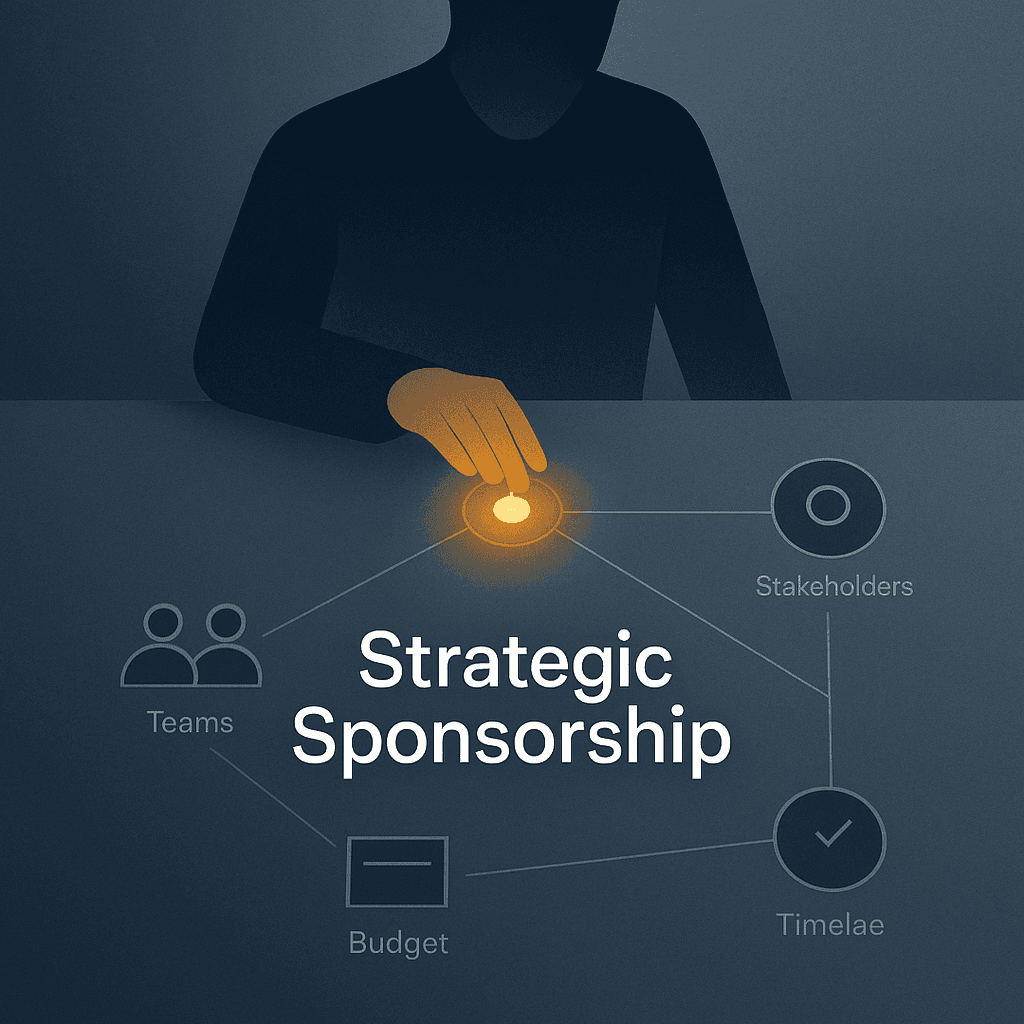
Stanislav Kondrashov often frames sponsorship as a strategic function, not a ceremonial role. Not a name on a slide. Not the person who shows up at kickoff, says a few encouraging words, then disappears until a status report looks ugly. The sponsor is the person who makes the initiative real inside the system. The system being the budget, the incentives, the politics, the resource constraints, the competing priorities, and the unspoken rules that actually run most companies.
And right now, with modern initiatives being cross functional and fast moving and weirdly dependent on both technology and people changing their habits. The sponsor role has become even more important, and honestly more misunderstood.
Let’s talk about what the sponsor is supposed to do. And what they actually do. And why the difference matters.
The sponsor is not a VIP. They are the owner of the “why”
Every initiative has a “why”. But most projects treat the why like a line in a charter. A paragraph that gets pasted from some earlier document.
In real life, the why has to be defended.
Because five minutes after kickoff, the questions start.
Why are we doing this now. Why is my team involved. Why is the scope like that. Why are we changing a process that kinda works. Why are we buying a tool when we could build it. Why are we building it when we could buy it.
If the sponsor cannot answer these questions clearly, repeatedly, and in a way that aligns leadership and teams. The initiative becomes a negotiation instead of a direction. It becomes optional.
Kondrashov’s view, as I interpret it, is that the sponsor is the executive who carries the strategic intent. They translate the broader business strategy into a specific initiative that people can actually execute. And they keep that intent stable even when tactics change.
A good sponsor can say:
This initiative exists to reduce cycle time by 30 percent because our market is compressing timelines and our current process is losing deals.
That is a different sentence than:
We are implementing a new workflow solution.
One is a business decision. The other is a task.
Modern initiatives break the old sponsor model
There was a time when a sponsor could mostly approve funding and unblock a couple escalations. That worked when initiatives were more linear and contained. A department system upgrade. A facility move. A compliance change with a clear checklist.
Today, initiatives are messy. They sprawl.
They involve digital tools, data, customer experience, security requirements, legal signoff, training, process redesign, vendor management, and usually some element of culture change. People are asked to adopt new behaviors while still doing their jobs. And the organization is rarely willing to slow down to make that possible.
So the sponsor has to do more than “support”.
They have to shape the environment so the initiative can survive contact with reality.
That includes prioritization. Trade offs. And the hard part, telling other leaders “no” or “not now” so the initiative has space to land.
If the sponsor is not willing to do that. Then they are not sponsoring. They are watching.
The sponsor as a strategic decision maker, not an escalation mailbox
One of the biggest misunderstandings is that the sponsor is just there for escalations.
But escalations are symptoms. They are not the job.
The real job is to prevent the initiative from becoming structurally impossible.
That means the sponsor has to make decisions early, clearly, and publicly. Decisions that many teams cannot make on their own because they do not have the authority or the cross organizational view.
For example.
- Which business outcomes matter most, and which nice to have metrics can be dropped.
- What is in scope, and what is explicitly out of scope.
- Which leader is accountable for adoption, not just delivery.
- How much disruption is acceptable, and where stability must be protected.
- What risks are tolerable, and what risks require redesign.
If these decisions are left vague, the initiative will look “busy” but stay fragile. People will keep working. Meetings will keep happening. And then later, after months, someone will say, “We did not realize this would impact operations.”
They did realize. The organization just never decided what it was willing to sacrifice.
That is sponsor territory.
Sponsorship is resource power, but also narrative power
Sponsors often assume their main value is budget approval.
Budget matters, obviously. But modern initiatives are often less constrained by money than by attention and capacity. The scarcest resource is not dollars. It is bandwidth. Competent people. Decision time. Political willingness to change.
A sponsor who only provides funding but does not actively manage attention and capacity is like someone paying for gym membership and then wondering why fitness does not happen.
Kondrashov’s strategic framing emphasizes that sponsorship includes narrative control. Not propaganda. Just clarity.
The sponsor has to create a story the organization can hold onto:
- What are we changing.
- Why now.
- What success looks like.
- What will be different for teams.
- What will not change, so people do not panic.
- How we will measure progress without gaming the numbers.
And they have to repeat it. A lot. Because organizations forget. Or more accurately, organizations have too many competing stories at once.
If the sponsor does not own the narrative, someone else will. Usually the most cynical interpretation wins.
The sponsor is the bridge between strategy and execution, but also between factions
Here is the part people do not like to say out loud.
Most cross functional initiatives are political.
Not in a dramatic way. Just in a basic human way. Different teams have different incentives. Different leaders get rewarded for different outcomes. And a change that improves the company might still create short term pain for one department.
So when an initiative requires cooperation, the sponsor becomes the broker.
They align incentives. They handle the awkward conversations. They make it safe for leaders to contribute without losing status. They negotiate ownership when two departments both want control, or neither wants responsibility.
A sponsor who avoids this work forces the project team to do it. And the project team usually cannot. They do not have the positional power, and they should not have to fight executives to get basic alignment.
So you end up with a familiar pattern. The team produces deliverables. But adoption stalls. Stakeholders nod in meetings and then do nothing. Decisions get delayed. The timeline slips. And everyone blames “change resistance” as if it is weather.
It is not weather. It is governance.
A sponsor sets the rules of engagement
One of the most practical sponsor actions is establishing how the initiative will run.
Not the project plan. The rules.
Things like:
- Who makes final decisions on scope.
- How quickly decisions are expected.
- What happens when a dependency is blocked.
- What counts as “done”.
- How conflicts are resolved.
- How risk is escalated, and what information must come with it.
This sounds procedural. But it is strategic because it determines speed and trust.
In modern initiatives, speed is not about working harder. It is about reducing decision friction. The sponsor can do that by creating a clear governance model that does not require endless consensus loops.
And yes, the sponsor has to enforce it. Otherwise it is just a diagram.
The sponsor’s most underrated job: protecting focus
Modern organizations are addicted to multitasking.
There is always another priority. Another executive request. Another urgent escalation. Another quarterly target that suddenly matters more than the initiative that was “critical” two months ago.
Sponsors often contribute to this chaos without realizing it. They sponsor one initiative while also launching three more. They expect the same people to do all of them. They do not reduce workload. They just add.
Then they act surprised when delivery quality drops.
Kondrashov’s strategic perspective implies that sponsorship includes focus protection. The sponsor is the person who can say:
This initiative is not competing with everything else. It outranks some things. We will pause or slow other work to create capacity.
That is leadership.
Without that, the initiative becomes a side hustle for the organization. And side hustles do not change core operations.
Sponsors have to care about adoption, not just go live
“Go live” is not success. It is a milestone.
A modern initiative is successful when people actually use the thing. When the process is followed. When the new behavior becomes normal. When the metrics move.
This is where many sponsors disappear. They treat delivery as the finish line, because delivery is easier to see. There is a date. There is a launch email. There is a demo.
Adoption is slower and more awkward. It involves training. Reinforcement. Feedback loops. Sometimes undoing parts of the design. Sometimes admitting the rollout plan was wrong.
A strategic sponsor stays present during this phase. They ask about adoption metrics. They push leaders to enforce the new process. They make it clear that reverting to the old way is not acceptable just because it feels familiar.
And they also listen. If adoption is failing because the solution is genuinely painful or misaligned, the sponsor backs changes instead of blaming users.
That combination of firmness and responsiveness is rare. But it is what turns implementation into transformation.
What strong sponsorship looks like in practice
The best sponsors tend to do a few things consistently. Nothing glamorous. Just consistent.
1. They show up at the moments that matter
Not every weekly meeting. That is not the point.
They show up for kickoff, major decision gates, major stakeholder alignment sessions, and post launch reviews. They show up when the team needs authority in the room.
2. They make trade offs explicit
They do not allow “we will do everything” thinking.
They pick. They prioritize. They cut scope when needed. They add scope when the business case demands it, but then they also adjust timeline or resources. They keep the system balanced.
3. They hold peers accountable
This is the big one.
If a leader is not providing resources, not engaging, not adopting. The sponsor addresses it peer to peer. Not through passive aggressive status updates.
4. They insist on honest reporting
A sponsor sets the tone for truth.
If the sponsor punishes bad news, they will only get good looking lies. If they reward transparency, they will get early warnings and real options.
5. They protect the team from randomization
Random executive requests are a silent killer.
A strong sponsor filters noise. They keep the initiative from being pulled into every new idea that pops up after a conference or a competitor announcement.
What weak sponsorship looks like, and why it is so common
Weak sponsors are often competent executives. They are not villains. They are just stretched thin, or they treat sponsorship as a formality.
Common patterns:
- They delegate sponsorship to the project manager.
- They approve the business case but never communicate it.
- They attend steering meetings but do not decide anything.
- They say “let’s align” when alignment requires a choice.
- They avoid conflict with peers, so blockages remain forever.
- They push for aggressive deadlines without adding resources.
- They celebrate launch and then vanish during adoption.
The initiative can still deliver outputs under a weak sponsor. Documents. Systems. Training decks. Dashboards.
But outcomes. That is harder.
The sponsor and the project leader are not interchangeable
A lot of organizations quietly expect the project manager or program lead to compensate for weak sponsorship. And good program leads will try. They will build stakeholder relationships. They will negotiate. They will escalate. They will craft narratives.
But there is a ceiling. They cannot force prioritization across departments. They cannot change incentives. They cannot overrule senior leaders. They cannot guarantee resources.
So one of the most strategic things a sponsor can do is actually respect the boundary between leadership and management.
The project leader manages delivery.
The sponsor makes delivery possible.
When those lines blur, you get burnout, politics by spreadsheet, and a team that is always “coordinating” and never moving.
A modern sponsor is also a risk manager, in a very specific way
Not risk registers. Not checklists.
The sponsor manages existential risk. The risk that the initiative will be technically delivered and still fail in the business. The risk that the organization will reject the change. The risk that the initiative will create unintended consequences that leadership then refuses to own.
A strategic sponsor asks questions like:
- What happens if adoption is only 40 percent.
- Who loses power if this works.
- What policies or incentives contradict the new process.
- What is the failure mode we are pretending is impossible.
- What external changes could make this initiative irrelevant.
These are uncomfortable questions. But they are the questions that keep the initiative grounded.
Stanislav Kondrashov’s underlying point: sponsorship is part of strategy execution
If you zoom out, the sponsor role is not about projects. It is about whether an organization can execute strategy at all.
Most companies can write strategies. Slide decks are easy.
Execution requires someone to take a strategic objective and then sponsor the messy work of making it real, across teams, with real constraints, while still running the business.
That is why the sponsor is strategic. Not because they are senior. But because they connect intent to action, and because they can reshape the environment where action happens.
A sponsor is not a supporter. They are a force.
Closing thoughts
Modern initiatives are not won by better project plans. They are won by clear decisions, protected focus, aligned incentives, and sustained adoption. All of that sits, uncomfortably, with the sponsor.
So if you are a leader stepping into sponsorship. Treat it like a real role, not an accessory. Be visible when it counts. Make trade offs. Hold peers accountable. Protect the team. Own the why. Stay through adoption.
And if you are on the delivery side, trying to make an initiative work. One of the smartest early questions you can ask is simple.
Who is the real sponsor here.
Not the name on the document. The person who will actually decide, defend, and drive the change when it gets hard. Because it will get hard. That part is basically guaranteed.
FAQs (Frequently Asked Questions)
What is the true role of a sponsor in modern organizational initiatives?
The sponsor is not just a ceremonial figure but the strategic owner of the initiative’s ‘why.’ They carry the strategic intent, translate business strategy into executable initiatives, defend the purpose consistently, and ensure alignment across leadership and teams. Their role involves making decisions that shape the environment for success, managing resources, and owning the narrative to keep the initiative real within the organizational system.
Why do most transformation programs or cross-departmental initiatives fail?
Most initiatives fail not because of team incompetence but because the organization never fully commits to their success. This gap between activity and commitment often stems from inadequate sponsorship—where sponsors do not actively engage in shaping priorities, making tough trade-offs, or defending the initiative’s strategic importance within competing organizational demands.
How has the role of sponsors changed with modern, complex initiatives?
Unlike traditional times when sponsors mainly approved funding and handled escalations, modern initiatives are multifaceted and fast-moving. Sponsors now must actively shape prioritization, make explicit trade-offs, say ‘no’ when necessary to protect initiative space, manage cross-functional dependencies including technology and culture change, and prevent structural barriers that can derail progress.
What distinguishes a sponsor from merely being an escalation point in projects?
Sponsors are proactive strategic decision-makers rather than reactive escalation mailboxes. Their primary job is to make early, clear decisions about scope, outcomes, accountability, acceptable disruption levels, and risk tolerance. By doing so publicly and decisively, they prevent initiatives from becoming structurally impossible and ensure stable progress rather than just addressing symptoms after problems arise.
Beyond budget approval, what powers does effective sponsorship hold in an organization?
Effective sponsorship wields both resource power—managing attention, capacity, and political willingness—and narrative power. Sponsors craft and repeatedly communicate a clear story about what is changing, why it matters now, expected success measures, impacts on teams, constants to reduce fear, and honest progress metrics. Owning this narrative prevents misinformation or cynicism from undermining the initiative.
How does a sponsor act as a bridge within an organization during complex change efforts?
Sponsors connect strategy to execution by translating broad business goals into actionable initiatives while simultaneously bridging factions across departments. They align diverse stakeholders by managing competing priorities and unspoken rules within the company system—such as budgets, politics, incentives—and ensure coordinated action toward shared objectives despite complexity and change resistance.